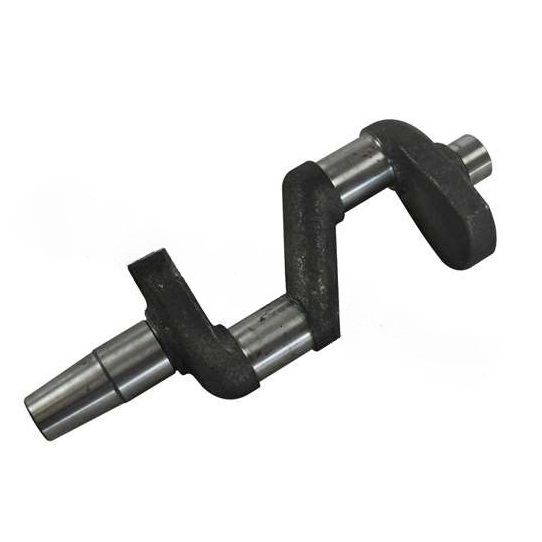
This Dewalt 5140121-19 Air Compressor Crankshaft converts motor rotation into reciprocating piston movement, enabling the compressor pump to generate compressed air efficiently. The part is used in compatible DeWalt air compressor models, including DXCMWA5591056, DXCMLA3706056, and DXCMTB5590856.
Common Symptoms Associated with Dewalt 5140121-19 Air Compressor Crankshaft:
- Excessive vibration during compressor operation.
- Unusual knocking or metallic tapping noise from pump assembly.
- Reduced air pressure buildup due to crankshaft imbalance.
- Visible wear on crankshaft journals or connecting rod contact points.
- Oil leakage near crankcase due to seal misalignment or shaft wear.
Knocking or Tapping Noise from Pump.
Quick Check: Listen for irregular contact between crankshaft and connecting rod assembly.
Fix Suggestion: Replace worn connecting rods or inspect crankshaft journals for scoring or deformation.
Prevention Tip: Maintain proper lubrication levels to reduce metal-on-metal wear.
Low Air Pressure Output.
Quick Check: Verify crankshaft rotation speed and check for slippage or binding.
Fix Suggestion: Replace damaged crankshaft bearings that may be restricting smooth rotation.
Prevention Tip: Perform routine lubrication checks and avoid overheating the compressor pump.
Oil Leakage from Crankcase Area.
Quick Check: Inspect crankshaft seals and housing for visible oil seepage.
Fix Suggestion: Replace worn crankshaft seals and ensure proper alignment during reassembly.
Prevention Tip: Avoid overfilling compressor oil and regularly inspect sealing components.
Crankshaft Wear or Scoring.
Quick Check: Remove pump cover and visually inspect shaft surface for grooves or uneven wear.
Fix Suggestion: Replace crankshaft if scoring is beyond tolerance limits.
Prevention Tip: Use recommended compressor oil and maintain scheduled servicing intervals.
Customer Experience: Many users report smoother compressor operation after replacing a worn crankshaft with this exact model, especially when addressing long-term vibration issues. Some technicians also note improved pressure consistency once alignment is corrected during installation.



Validate your login