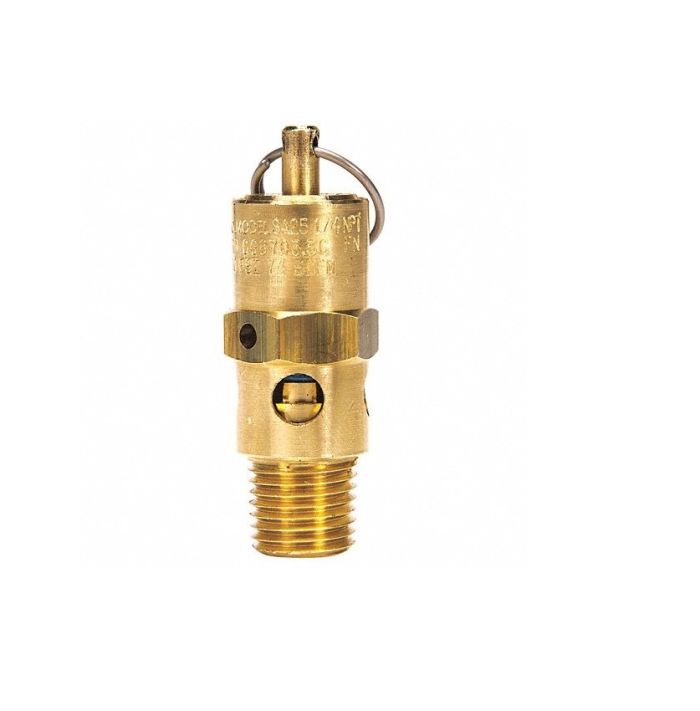
The Ingersoll-Rand Safety Valve 72062185 is designed to protect compatible Ingersoll Rand reciprocating air compressors from unsafe pressure buildup. This valve is commonly used on select 2475-series compressor systems and low-pressure head assemblies.
Common issues related to this safety valve include:
- Safety valve releasing air continuously.
- Valve opening before normal operating pressure is reached.
- Compressor pressure exceeding safe limits.
- Air leakage around the valve threads.
- Intermittent pressure relief during compressor cycling.
Safety Valve Constantly Releasing Air.
Quick Check: Verify actual tank pressure using a secondary pressure gauge.
Fix Suggestion: Inspect internal compressor reed valves and replace the 72062185 safety valve if the spring or seal is damaged.
Prevention Tip: Perform regular compressor valve inspections to prevent pressure imbalance inside the pump assembly.
Valve Pops Before Full Pressure Is Reached.
Quick Check: Confirm the pressure switch cut-out setting matches compressor specifications.
Fix Suggestion: Replace a weak or improperly calibrated safety valve and inspect for inaccurate pressure gauge readings.
Prevention Tip: Avoid adjusting pressure switch settings beyond factory recommendations.
Air Leak Around Safety Valve Threads.
Quick Check: Inspect the threaded connection for looseness or damaged sealing surfaces.
Fix Suggestion: Reinstall the valve using appropriate thread sealant and replace worn fittings if necessary.
Prevention Tip: Check threaded fittings during routine maintenance to prevent vibration-related loosening.
Compressor Exceeds Safe Pressure Range.
Quick Check: Monitor whether the safety valve activates at the rated 80 PSI threshold.
Fix Suggestion: Replace a stuck or contaminated valve immediately to maintain proper pressure relief protection.
Prevention Tip: Keep moisture and debris out of the air system by maintaining filters and drain valves regularly.
Customer Experience: Several Ingersoll Rand compressor owners reported that replacing worn or sticking safety valves restored proper pressure regulation and prevented nuisance pressure releases. Technicians also noted that repeated valve blow-off events often pointed to failing reed valves or pressure switch calibration problems rather than the safety valve itself.



Validate your login