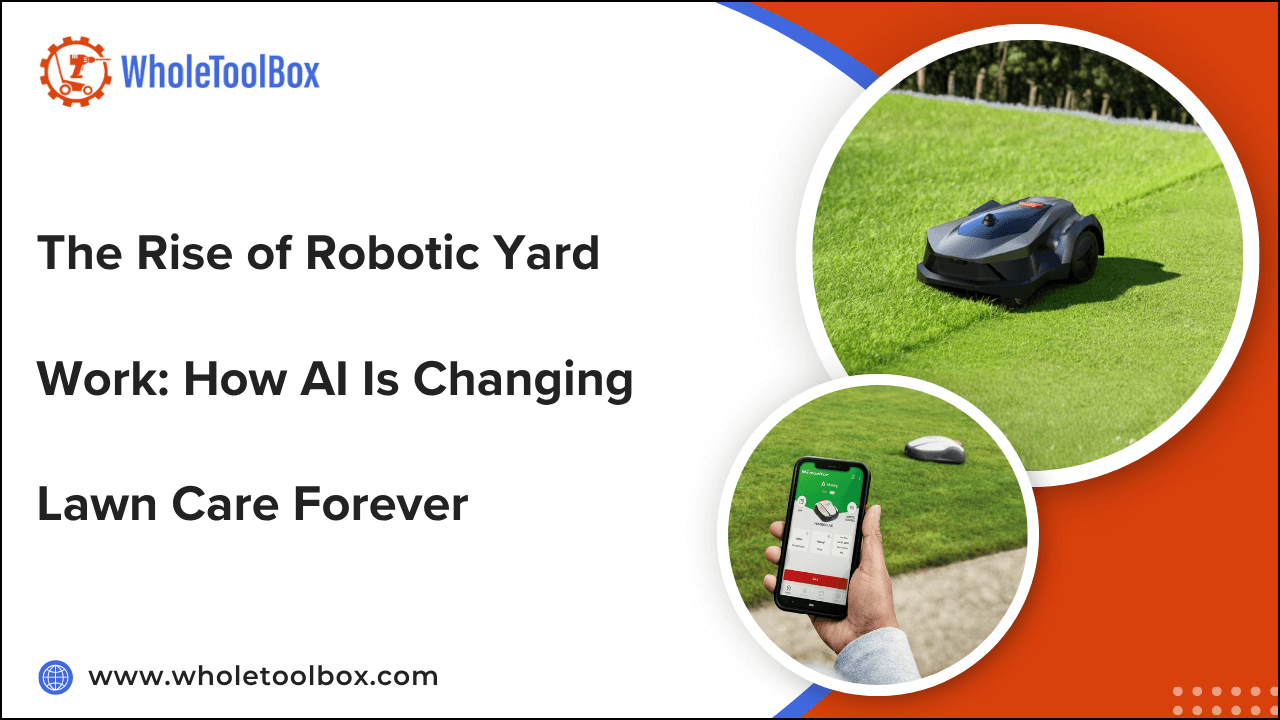
The Rise of Robotic Yard Work: How AI Is Changing Lawn Care
The world of lawn care is undergoing a remarkable transformation, thanks to the rise of artificial intelligence and robotic technology. What was once a time-consuming weekend chore is now becoming effortless with the help of smart, automated yard tools. From robotic lawn mowers that learn your lawn’s layout to AI-driven irrigation systems that optimize water use, these innovations are redefining how homeowners maintain their outdoor spaces.
As technology evolves, robotic yard equipment offers more than just convenience; it provides precision, sustainability, and year-round consistency. Whether it’s trimming grass, detecting weeds, or monitoring soil health, AI-powered lawn care systems are revolutionizing outdoor maintenance, giving homeowners more time to enjoy their yards rather than work on them.
How AI Is Shaping the Future of Robotic Yard Work
AI is transforming robotic yard maintenance, making it more intelligent, efficient, and sustainable. Below are key innovations and real-time examples that are shaping the future of robotic yard work:
-
Machine Learning for Personalized Yard Maintenance
AI learns and adapts to specific yard conditions, optimizing care based on weather, soil, and plant health.
Example: RoboMow’s Adaptive Mowing – RoboMow adjusts its mowing frequency based on real-time grass growth, ensuring a perfectly maintained lawn without overworking the mower. -
Advanced Navigation and 3D Mapping
AI-powered robots use 3D mapping to navigate complex yards, avoiding obstacles and ensuring precise lawn care.
Example: Husqvarna Automower 450X – This robotic mower uses GPS and AI to create detailed yard maps, allowing it to mow efficiently even in challenging terrains with multiple obstacles. -
Voice and App Integration for Seamless Control
AI enables voice and app control, allowing homeowners to schedule, monitor, and adjust robotic yard tools remotely.
Example: iRobot Terra’s Voice & App Integration – The iRobot Terra mower can be controlled via an app or voice commands, enabling users to schedule mowing sessions from anywhere. -
Multi-Tasking Robots
Some AI robots can perform multiple yard tasks, such as mowing, weeding, and even watering, using interchangeable modules.
Example: Tertill Garden Weeding Robot – The Tertill robot autonomously weeds gardens, distinguishing between plants and weeds, and can eventually take on additional tasks like mulching. -
Sustainability Through AI-Powered Resource Optimization
AI optimizes resource use, reducing energy consumption and waste through smarter scheduling and task execution.
Example: EGO Power+ Mower’s Energy Efficiency – This mower adjusts its battery usage based on grass type and moisture levels, ensuring energy-efficient operation and longer battery life. -
AI-Powered Sensors for Real-Time Decision Making
AI sensors analyze real-time environmental data to make immediate adjustments, like watering or trimming, based on current yard conditions.
Example: GreenWorks Smart Lawn Care Robot – This robot uses AI sensors to monitor soil moisture and adjust watering patterns, promoting water conservation and lawn health.
The Role of Artificial Intelligence in Modern Lawn Technology
AI is transforming lawn care into a smarter, more efficient process, pushing beyond traditional robotic mowers and sprinklers. Revolutionary AI technology is reshaping how we manage and maintain our lawns.
-
AI-Driven Microclimate Analysis: AI tools now assess microclimates within your lawn, identifying areas that are sunnier, wetter, or prone to frost. This enables hyper-targeted lawn care, ensuring different zones receive exactly what they need.
Example: Turfbot uses AI to map out microclimates in your yard, adjusting its watering and fertilization strategies to the unique needs of each section, reducing waste and improving overall lawn health. -
Deep Learning for Pest Prediction: AI doesn’t just detect pests; it can predict infestations based on environmental factors. By analyzing weather patterns, soil conditions, and plant health, AI anticipates pest outbreaks before they occur.
Example: Bosch Smart Lawn Sensor uses deep learning algorithms to predict pest invasions, sending alerts and recommending preventive treatments, ensuring proactive lawn care. -
Automated Soil Health Enhancement: AI systems now monitor and improve soil health through continuous data collection. These AI-driven sensors detect nutrient imbalances and suggest real-time solutions for soil enrichment.
Example: The PlantaSense AI system continually analyzes soil pH and nutrient levels, recommending tailored adjustments to your lawn care routine, such as the precise type of fertilizer or pH balancer needed. -
AI-Powered Custom Lawn Designs: AI can help design your lawn to optimize space and aesthetics. By analyzing environmental factors, the system can recommend the best plant species for your soil, creating a low-maintenance, sustainable yard.
Example: Land AI designs custom landscaping plans that adapt to your yard’s conditions, making recommendations for plants and layouts that promote long-term sustainability and aesthetics. -
AI-Enhanced Lawn Health Diagnostics: Instead of just spotting surface-level issues like brown patches, AI can analyze the full health of your lawn by comparing it to vast databases of lawn types and diseases.
Example: YardSense uses AI to identify early signs of disease or nutrient deficiencies, offering precise diagnostics and suggesting solutions specific to your lawn's current condition.
AI is revolutionizing lawn care with smart, data-driven solutions for efficiency and sustainability. It creates healthier, low-maintenance lawns with minimal effort.
From Manual to Automated: AI in Lawn and Garden Tools
Robotic lawn tools are reshaping lawn care by combining breakthrough innovations with intelligent automation. These smart devices ensure precise, effortless maintenance tailored to your yard’s needs.
|
Feature |
Advantage |
|
AI-Driven Soil Microbiome Analysis |
AI analyzes soil microbes to optimize health and promote a balanced ecosystem for greener lawns. |
|
Modular Multi-Function Robots |
Robots switch tools to mow, trim, aerate, or control pests, reducing equipment needs. |
|
AI-Integrated Plant Health Imaging |
AI detects plant diseases and deficiencies early to prevent lawn damage. |
|
Real-Time Carbon Footprint Tracking |
Systems track energy and water use to promote eco-friendly lawn care. |
|
Swarm Robotics for Large Lawns |
Multiple robots collaborate to efficiently maintain large properties. |
|
AI-Based Wildlife and Pollinator Protection |
Robots avoid pollinator habitats to protect local biodiversity |
|
Predictive Growth Modeling |
AI forecasts growth to schedule proactive lawn care. |
|
Self-Healing Robot Shells |
Robot shells self-repair minor damage to extend lifespan and reduce costs. |
The Evolution of Lawns Through Intelligent Yard Technology
Lawns have evolved from simple green spaces to intelligent ecosystems powered by advanced technology. This evolution is making lawn care more efficient, sustainable, and personalized than ever before.
-
From Manual Labor to Automation:
Lawns have evolved from being cared for by hand to using autonomous robots and smart systems that handle mowing, watering, and maintenance automatically. -
From Uniform Care to Customized Maintenance:
Instead of treating the lawn as one uniform space, technology now divides it into zones, evolving the approach into precise, site-specific care. -
From Reactive to Predictive Care:
Traditional lawns were tended reactively after problems appeared; now AI predicts growth, weather, and pest issues to proactively maintain lawn health. -
From Aesthetic Focus to Ecological Balance:
The lawn’s role evolved from purely visual appeal to supporting biodiversity, sustainability, and creating healthier ecosystems. -
From Isolated Tools to Integrated Systems:
Lawn care tools evolved from standalone machines to interconnected devices that communicate and coordinate for smarter maintenance. -
From Static Grass to Dynamic Ecosystems:
Lawns are now adaptive environments that respond in real-time to soil, climate, and human activity changes, constantly evolving for better health.
Read this article on next-gen robotic mower technology: AI-powered tri-fusion navigation system to explore how advanced AI is revolutionizing lawn care with smarter, more efficient mowers.
AI-Powered Robotics Transforming Outdoor Spaces
AI robotics are revolutionizing outdoor spaces with smart, sustainable innovations that adapt to nature and your needs.
-
Self-Optimizing Garden Layouts: AI robots analyze plant growth patterns and continuously rearrange movable planters or modular garden elements to maximize sunlight and space efficiency.
-
Robotics-Assisted Urban Farming: Compact AI-driven robots manage rooftop and balcony gardens, optimizing limited space and resources for maximum yield in urban environments.
-
AI-Enabled Soil Carbon Sequestration: Specialized robots enhance soil carbon capture by monitoring and managing organic matter decomposition to fight climate change right from your yard.
-
Integrated Pest Behavior Disruption: Using AI-driven sound waves and pheromone release, robots disrupt pest mating cycles, reducing the need for chemical pesticides naturally.
-
Adaptive Water Vapor Harvesting: Robotics systems capture moisture from the air during humid nights, recycling it for irrigation, especially useful in water-scarce regions.
-
AI-Powered Plant Communication Monitoring: Advanced sensors in robots pick up plant bioelectrical signals, allowing the system to ‘listen’ and respond to plant stress or needs in real time.
-
Robotic Microclimate Creation: AI robots can manipulate small-scale wind flows or humidity levels around plants, creating ideal microclimates for sensitive species.
-
Dynamic Edible Landscape Management: Robots selectively harvest ripe fruits and vegetables while managing growth cycles for continuous production in edible landscaping.
Final Thoughts: The Future of Lawn Care Is Smarter, Effortless, and AI-Driven.
As AI-powered robotics continue to evolve, lawn care is no longer a chore but an intelligent, automated experience. From predictive maintenance to eco-friendly innovations, these technologies are reshaping how we interact with our outdoor spaces. The future of yard work is not just about convenience—it's about sustainability, precision, and personalization. Embracing AI in lawn care means more time to enjoy your yard, less environmental impact, and a smarter way to live outdoors.
Looking for efficient lawn care solutions with robotic technology? At WholeToolBox, we offer parts like mower blades, aerators, and lawn trimmers from leading brands like Husqvarna, Toro, and Tanaka. Upgrade your lawn care with advanced tools for precision and ease.
References:
https://www.pbs.org/
https://www.theenvironmentalblog.org/
FAQs
How much does it cost to own an AI-powered lawn robot?
Most models range from $700 to $3,500, depending on features, with yearly maintenance averaging around $150–$500.
Why is AI-driven yard work better for large or irregular lawns?
AI maps complex layouts precisely, ensuring every inch is covered efficiently without missing spots or overlapping excessively.
How do robotic yard tools manage battery life during long tasks?
They automatically return to their charging stations when power runs low and resume work once recharged.