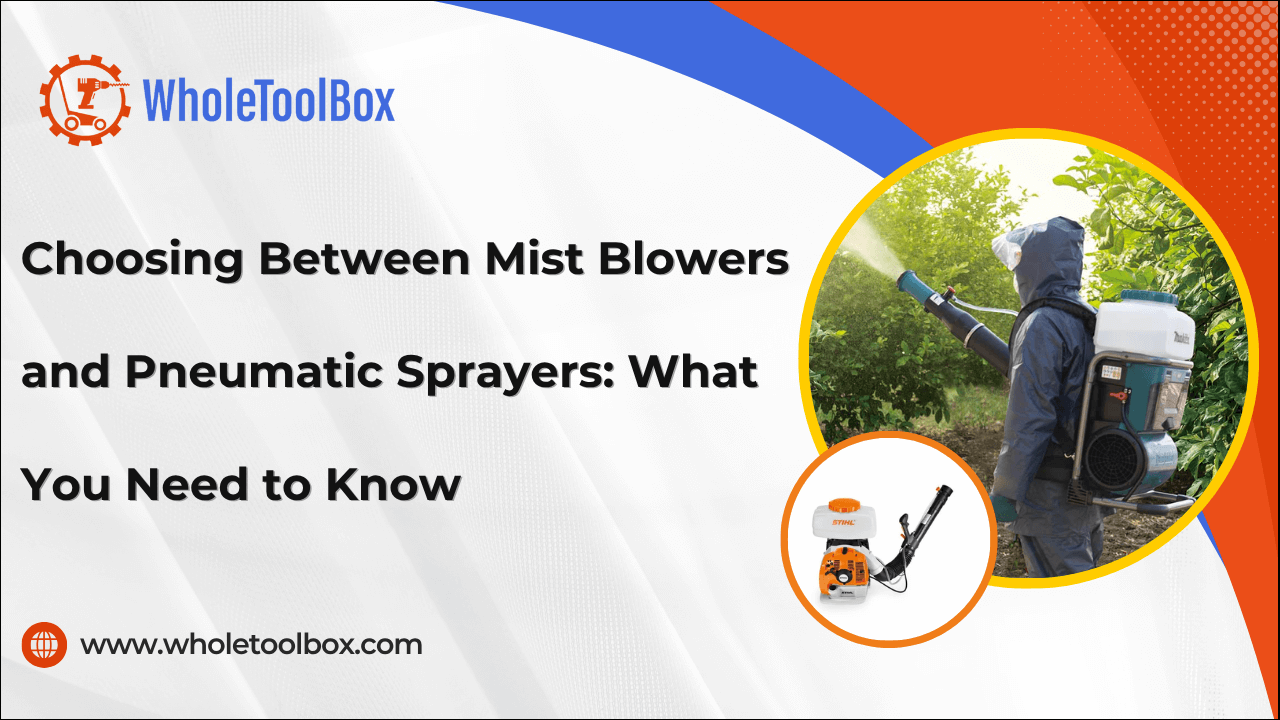
Choosing Between Mist Blowers and Pneumatic Sprayers: What You Need to Know
Maintaining healthy lawns and thriving crops requires the right tools, especially when it comes to applying fertilizers, pesticides, and herbicides. Two of the most commonly used devices in agricultural and lawn care applications are mist blowers and pneumatic sprayers. While they may seem similar at first glance, each serves specific purposes and offers distinct advantages. Understanding the differences can help you make an informed decision and get better results from your spraying efforts. Whether you manage a small lawn, a large farm, or a commercial landscape, choosing the correct spraying equipment can improve productivity, efficiency, and plant health.
How Mist Blowers and Pneumatic Sprayers Work: Features, Uses, Pros & Cons
When selecting spraying equipment, it’s important to understand how mist blowers and pneumatic sprayers work, their key features, and ideal applications. This knowledge will help you choose the right tool for your specific lawn or agricultural needs. Below is a detailed breakdown of both types to guide your decision.
Mist Blowers: How They Work
Mist blowers use a powerful fan to generate high-speed air that atomizes liquids into very fine droplets and propels them over long distances. This makes them highly effective for quickly covering large areas and penetrating dense canopies or tall crops.
Key Features of Mist Blowers:
-
High-Velocity Airflow: Enables long-distance spraying and deep penetration into thick foliage.
-
Fine Droplet Atomization: Creates uniform mist for efficient chemical use and even coverage.
-
Variety of Models: Available as backpack, handheld, or tractor-mounted units to suit different scales.
-
Wide Spray Coverage: Suitable for treating large fields or orchards with fewer passes.
Pros of Mist Blowers:
-
Efficient coverage of large areas in less time.
-
Reduced chemical waste due to fine mist and targeted application.
-
Can reach difficult spots, such as undersides of leaves and dense foliage.
Cons of Mist Blowers:
-
Drift risk increases in windy conditions due to fine droplets.
-
Less precision; may spray unintended areas.
-
Backpack models can be heavy and noisy, potentially causing operator fatigue.
Pneumatic Sprayers: How They Work
Pneumatic sprayers rely on compressed air, either manually pumped or motorized, to push liquid through nozzles. This system provides precise and controlled spraying, ideal for smaller areas or spot treatments.
Key Features of Pneumatic Sprayers:
-
Compressed Air Pressure: Allows consistent flow and atomization of spray liquid.
-
Adjustable Nozzles: Enable customized spray patterns for targeted application.
-
Portability: Usually lightweight and easy to handle, great for small to medium plots.
-
Precision Control: Ideal for spot treatments and delicate plant care.
Pros of Pneumatic Sprayers:
-
Highly accurate application with minimal drift.
-
Easier to maneuver and operate, suitable for beginners.
-
Efficient for spot treatments and tight spaces.
Cons of Pneumatic Sprayers:
-
Slower coverage rate for large areas compared to mist blowers.
-
Frequent refilling is needed when treating bigger plots.
-
Limited ability to penetrate dense canopies or tall crops.
Check out this article on lawn fertilizer: how to apply for optimal results to learn expert tips on maximizing growth and maintaining a healthy lawn.
Key Factors to Consider When Choosing a Sprayer
Choosing the right sprayer for lawn care or crop management depends on area size, plant type, spray precision, usage frequency, and budget. Here’s a detailed guide tailored to these specific applications.
Size of the Treatment Area
-
Large Farms or Crop Fields: Mist blowers offer wide coverage for fast, efficient spraying.
-
Home Lawns or Small Garden Beds: Pneumatic sprayers are best for controlled, compact areas.
-
Suburban Lawns or Mid-Sized Plots: Choose based on coverage speed vs. accuracy.
-
Tight Corners or Borders: Pneumatic sprayers help avoid overspray near fences or paths.
Type of Vegetation or Crop Density
-
Tall Crops (e.g., Corn, Sugarcane): Mist blowers penetrate upper and inner canopy layers.
-
Short Crops and Lawns (e.g., Grass, Greens): Pneumatic sprayers ensure gentle, focused coverage.
-
Mixed Crop Fields: Use mist blowers for uniformity, or vary equipment based on crop zones.
-
Dense Shrub Borders in Landscapes: Mist blowers can cover thick, layered plantings efficiently.
Type of Application and Treatment Goal
-
Fertilizing Entire Fields or Lawns: Mist blowers reduce time and ensure even spread.
-
Spot-Treating Weeds or Insects: Pneumatic sprayers allow for accurate placement.
-
Liquid Herbicide Use on Lawns: Pneumatic sprayers prevent harming surrounding grass.
-
Fungicide on Crops: Mist blowers help coat both tops and undersides of leaves thoroughly.
Weather and Environmental Conditions
-
Wind-Prone Fields: Pneumatic sprayers reduce drift and chemical loss.
-
Still Weather Conditions: Mist blowers maximize reach with minimal interference.
-
Humidity and Evaporation: Pneumatic sprayers waste less during hot, dry conditions.
-
Near Residential Areas: Pneumatic sprayers offer safer, contained application near homes.
Frequency of Use
-
Weekly or Biweekly Crop Treatments: Mist blowers boost productivity and consistency.
-
Seasonal Lawn Care: Pneumatic sprayers are easier to prep and use on-demand.
-
Ongoing Pest Management: Mist blowers reduce total spray time across cycles.
-
Infrequent Garden Treatments: Pneumatic sprayers are ideal for occasional use.
Operator Skill, Comfort, and Safety
-
Beginner Gardeners or Lawn Owners: Pneumatic sprayers are light, quiet, and simple.
-
Professional Landscapers or Farm Workers: Mist blowers allow faster coverage for larger crews.
-
Extended Use Over Large Fields: Mist blowers reduce strain but may need breaks.
-
Safety in Enclosed Spaces: Pneumatic sprayers are better for greenhouses or small yards.
Equipment Cost and Long-Term Investment
-
Small Budget Projects: Pneumatic sprayers are affordable with low maintenance.
-
Long-Term Farm Planning: Mist blowers offer ROI for high-acreage spraying.
-
Lawn Service Providers: Mist blowers enhance productivity and reduce service time.
-
Homeowners with Minimal Needs: Pneumatic sprayers offer value without overspending.
Chemical Usage and Environmental Impact
-
Fine Droplet Spraying on Crops: Mist blowers ensure efficient nutrient uptake.
-
Targeted Application on Lawns: Pneumatic sprayers reduce runoff and protect non-target plants.
-
Environmental Safety: Pneumatic sprayers help prevent chemical overuse in suburban areas.
-
Efficient Use of Expensive Inputs: Mist blowers maximize output with less waste in large plots.
Portability and Storage Requirements
-
Urban Lawns and Small Gardens: Pneumatic sprayers are easy to carry and store.
-
Larger Farms: Mist blowers may require mounting or wheeled systems.
-
Tool Shed or Garage Fit: Pneumatic models take minimal space for homeowners.
-
Transport Across Fields: Mist blowers can be towed or carried with ease in open land.
Versatility Across Tasks
-
Lawn Fertilization, Spot Spraying, and Watering: Pneumatic sprayers are multi-functional.
-
Crop Spraying for Pests, Diseases, and Foliar Feeding: Mist blowers excel in uniform coverage.
-
Home and Landscape Use: Pneumatic sprayers adapt easily to non-agricultural tasks.
-
Orchard and Vineyard Treatments: Mist blowers offer the reach and canopy penetration needed.
Read this article on future lawn care: smart robotic tools to find how automation is revolutionizing garden maintenance and boosting efficiency.
How to Choose the Right Sprayer for Your Lawn or Crop
Choosing the best sprayer means matching your specific lawn or crop conditions with the right features. Use this practical checklist to guide your decision:
-
Estimate Your Spray Volume Needs: Know how much liquid you’ll apply each time. Large-volume sprays call for mist blowers, while smaller doses suit pneumatic sprayers.
-
Prioritize Uniform Spray Coverage: Mist blowers create a fine mist that blankets leaves evenly, boosting nutrient uptake. Pneumatic sprayers offer more targeted control but may need extra passes.
-
Match Spray Pattern to Your Lawn or Crop: Fine droplets from mist blowers cover large areas but can drift. Larger droplets from pneumatic sprayers reduce drift, perfect for precise lawn care.
-
Choose the Right Power Source for You: Mist blowers typically use motors considering fuel and noise. Pneumatic sprayers rely on manual pumping or small motors, which are quieter and eco-friendly.
-
Plan for Future Growth and Expansion: If you expect your lawn or crops to grow, investing in a mist blower now saves time later. For steady, small-scale tasks, pneumatic sprayers offer convenience and savings.
Safety Precautions When Spraying Fertilizers and Pesticides
Using sprayers safely is crucial to protect yourself, your plants, and the environment. Follow these practical safety tips for effective and responsible spraying on lawns and crops:
-
Stay Safe When Spraying: Always wear gloves, goggles, masks, and long sleeves to prevent skin and respiratory exposure. Proper PPE protects you from harmful chemicals.
-
Mix in Ventilated Areas: Prepare chemicals outdoors or in well-ventilated spaces to avoid inhaling toxic fumes. This reduces your risk of respiratory problems.
-
Spray in Calm Weather: Apply sprays early morning or late evening when wind speeds are low. Calm conditions reduce drift and improve spray accuracy.
-
Use Proper Application Rates: Follow label instructions carefully to avoid over-applying chemicals. Excessive use can harm plants and cause environmental runoff.
-
Calibrate Your Sprayer: Regularly check and adjust your equipment for accurate chemical delivery. Proper calibration ensures even and effective coverage.
-
Clean Equipment Thoroughly: Rinse tanks, hoses, and nozzles after each use to prevent clogging and chemical buildup. Clean equipment lasts longer and works better.
-
Store Chemicals Safely: Lock chemicals in a cool, dry place away from children and pets. Label containers clearly to avoid accidental misuse.
-
Dispose of Chemicals Properly: Follow local regulations for disposing of leftover chemicals and containers. Never pour chemicals onto soil or down drains.
-
Wash Up After Spraying: Remove contaminated clothing immediately and wash exposed skin with soap and water. This reduces the risk of chemical absorption.
Final Thoughts
Choosing between mist blowers and pneumatic sprayers depends on your specific lawn or crop needs, the area size, and the level of precision required. Mist blowers are ideal for large-scale coverage and reaching dense foliage, while pneumatic sprayers excel in targeted, precise applications. Understanding these differences and using each tool correctly, along with following proper safety practices, will help you achieve healthier plants and more efficient spraying results.
Looking for replacement parts to keep your lawn in top shape? At WholeToolBox, we offer high-quality nozzles, tanks, hoses and replacement filters from leading brands like Stihl, Husqvarna, and Echo. Shop now to ensure your equipment performs at its best for healthier lawns and thriving crops!
FAQs
Which sprayer is better for large fields?
Mist blowers are better suited for large fields because they cover extensive areas quickly. Their strong airflow helps reach tall or dense plants effectively.
Are pneumatic sprayers suitable for indoor use?
Yes, pneumatic sprayers work well indoors like in greenhouses due to their precise application. They reduce chemical drift, making them safer for confined spaces.
How do I maintain a mist blower?
Clean the tank and nozzles after each use and check the fan for debris regularly. Also, ensure the engine is well-maintained to keep it running smoothly.
Can I use a pneumatic sprayer for pesticide application?
Yes, pneumatic sprayers are designed for accurate pesticide delivery. They minimize chemical waste and environmental impact.
Do mist blowers consume more chemicals?
Mist blowers may use more chemicals due to larger droplets, but they cover large areas faster. This can balance out chemical consumption over time.