How to Fertilize Your Lawn Without Overfeeding or Burning the Grass
Wondering how to keep your lawn green and healthy without overfeeding or burning the grass? Proper lawn fertilization starts with knowing your grass type, soil nutrient levels, fertilizer application rate, and the right time to apply it. Penn State Extension recommends testing the soil to determine which nutrients your lawn may need before fertilizing and using the fertilizer according to the manufacturer’s specified application rate.
Nitrogen, phosphorus, and potassium are the primary nutrients listed on lawn fertilizer labels, but established lawns do not always need all three in equal amounts. Applying too much fertilizer, spreading it unevenly, or overlapping passes can create concentrated areas that damage turf. Choosing the right fertilizer and applying it at the recommended rate can help provide needed nutrients while reducing the risk of fertilizer burn.
In this blog, you’ll learn how to select fertilizer based on your grass type and soil conditions, determine when and how often to fertilize, and apply it evenly across your lawn. You’ll also learn how to prevent fertilizer burn and support long-term turf health through proper mowing, watering, and nutrient management.
Why Is Lawn Fertilization Important for Healthy Grass Growth?
Lawn fertilization supplies nutrients that may be limited in the soil, helping support healthy roots, leaf growth, turf density, and recovery from mowing and everyday wear. Nitrogen, phosphorus, and potassium are the three primary nutrients needed by turfgrass, but nutrient requirements vary by grass type, soil conditions, climate, and season.
A soil test can help identify nutrient deficiencies and determine whether fertilizer is needed. Below are the key nutrients and their roles in healthy turf:
- Nitrogen (N): Promotes leaf growth and helps maintain healthy green color.
- Phosphorus (P): Supports root development when soil phosphorus levels are insufficient.
- Potassium (K): Supports normal plant functions and helps turf tolerate environmental stresses.
- Secondary nutrients: Calcium, magnesium, and sulfur support essential plant processes when needed.
- Micronutrients: Iron, manganese, and zinc are required in smaller amounts for normal turf growth.
Fertilizer rates are typically expressed as pounds of a nutrient, such as nitrogen, per 1,000 square feet. For example, applying 1 pound of nitrogen per 1,000 square feet would require about 3.8 pounds of a 26-5-10 fertilizer, because the product contains 26% nitrogen. Actual application rates vary by grass type, soil conditions, and fertilizer recommendations.
Choosing the Right Fertilizer for Your Lawn and Grass Type
Choosing the right lawn fertilizer starts with understanding your soil, grass type, nutrient needs, and fertilizer formulation. A soil-based approach helps prevent unnecessary applications and supports healthy turf growth. Follow these steps to choose a fertilizer that matches your lawn's specific needs:
Step 1: Start With a Soil Test
Test soil pH and nutrient levels to identify whether phosphorus, potassium, lime, sulfur, or other amendments are needed.
Step 2: Understand the N-P-K Numbers
Check the three numbers on the fertilizer label for nitrogen, phosphate, and potash percentages. For example, a 16-4-8 fertilizer contains 16% nitrogen, 4% phosphate, and 8% potash.
Step 3: Match Fertilizer to Your Grass Type
Choose fertilizer based on your grass species and growing season. Cool-season grasses grow best in cooler conditions, while warm-season grasses perform better in warm weather. Transition-zone lawns need careful timing due to temperature changes.
Step 4: Choose the Right Fertilizer Formulation
Select quick-release, slow-release, controlled-release, or organic fertilizer based on how quickly nutrients should become available to the grass.
Step 5: Consider Phosphorus Requirements
Use soil test results to determine whether phosphorus is needed, since established lawns may already have sufficient levels. Check state and local regulations before applying phosphorus-containing fertilizer.
This step-by-step process helps provide the nutrients your lawn needs while reducing unnecessary applications and the risk of overfeeding.
Best Time and Frequency for Lawn Fertilization
The table below outlines the best fertilization timing and frequency considerations for different grass types and lawn conditions:
|
Fertilization Factor |
Recommended Approach |
|
Cool-Season Grasses |
Kentucky bluegrass, perennial ryegrass, and tall fescue generally benefit from early fall fertilization. A lighter spring application may also be appropriate based on soil conditions and lawn needs. |
|
Warm-Season Grasses |
Bermudagrass, Zoysiagrass, St. Augustinegrass, and centipedegrass should generally be fertilized after full green-up and during active growth, typically from late spring through summer. |
|
Transition-Zone Lawns |
Use regional turf recommendations because seasonal temperature changes can stress both cool-season and warm-season grasses. |
|
Application Frequency |
Some lawns may need one or two applications per year, while higher-maintenance turf may require several applications during active growth. Total annual nitrogen is more important than the number of applications alone. |
|
Poor Conditions to Avoid |
Do not fertilize dormant, severely drought-stressed, frozen, or waterlogged turf. Delay applications when heavy rainfall could cause nutrient runoff. |
|
Scheduling Approach |
Base the schedule on grass growth, soil-test results, local recommendations, and the fertilizer label rather than following a fixed calendar. |
How to Apply Lawn Fertilizer Without Overfeeding Your Grass
Once you have selected a fertilizer appropriate for your grass type, soil conditions, and nutrient requirements, applying it correctly is essential for avoiding excessive fertilizer and maintaining consistent turf growth. The fertilizer label should remain the primary source for application rate, spreader settings, timing, and watering instructions. Follow these practices for a more controlled application:
- Measure the Lawn Area: Calculate the total square footage of the turf before applying fertilizer. Exclude sidewalks, driveways, patios, garden beds, and other areas that should not receive fertilizer. Accurate measurements help prevent applying more product than the label rate allows.
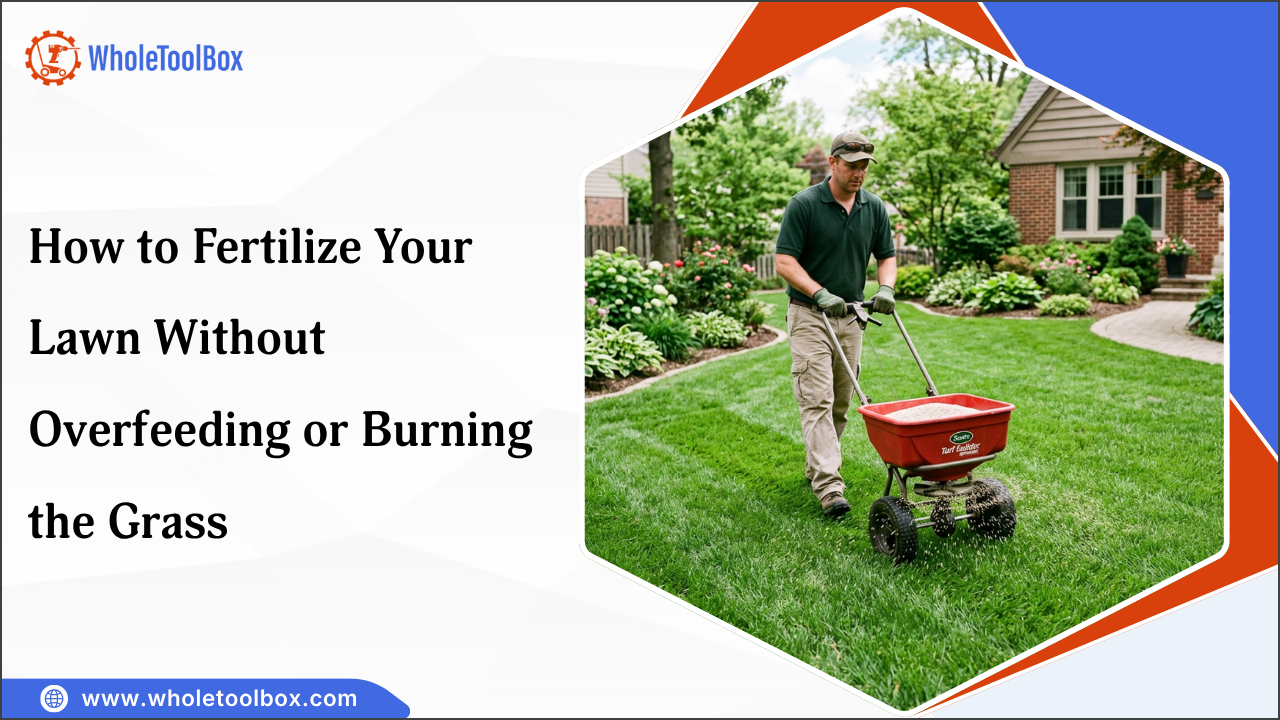
- Calibrate the Spreader: Set the broadcast or drop spreader according to the fertilizer manufacturer's instructions. Test the spreader over a measured area and adjust it to deliver the specified application rate. Recalibrate whenever you change fertilizer products because granule size, particle density, and formulation can affect how much fertilizer the spreader releases.
- Apply Fertilizer Evenly: Maintain a consistent walking speed and make evenly spaced passes across the lawn. Avoid overlapping application patterns, which can create areas with excessive nutrient concentrations. Shut off the spreader before reaching the end of each pass and while turning to help prevent fertilizer buildup.
- Keep Fertilizer Off Hard Surfaces: If fertilizer lands on sidewalks, driveways, patios, or other hard surfaces, sweep it back onto the lawn when appropriate rather than leaving it where rain or irrigation can carry nutrients into storm drains. Do not hose fertilizer into drainage systems.
- Follow the Product's Watering Directions: Check the fertilizer label for specific post-application watering requirements. Water according to those instructions and avoid excessive irrigation, which can move soluble nutrients below the grass root zone or increase nutrient runoff.
For consistent lawn fertilization, focus on three things: measure the area accurately, apply the labeled rate evenly, and follow the manufacturer's instructions for watering and application timing. These practices help minimize the risk of overfeeding while providing grass with nutrients where they are needed for healthy growth.
|
Safety Note: Always follow the fertilizer product label and local regulations. Keep fertilizer away from children and pets, avoid contact with eyes or skin, and store it safely when not in use. |
Tips to Prevent Fertilizer Burn and Support Long-Term Lawn Health
Fertilizer burn occurs when excess fertilizer salts build up around grass roots and interfere with water uptake. Yellow or brown patches, scorched blades, and stripes or spots can indicate excessive or uneven fertilizer application. Here are the key tips to prevent fertilizer burn and support long-term lawn health:
- Follow the Product Label: Use the recommended application rate, timing, and watering instructions for the specific fertilizer. Applying more fertilizer will not necessarily produce faster or healthier growth.
- Avoid Fertilizing Stressed Turf: Delay fertilization when grass is under severe drought, extreme heat, flooding, or other major stress. Allow the lawn to recover before applying additional nutrients.
- Keep Fertilizer Off Non-Target Surfaces: Prevent fertilizer from collecting on driveways, sidewalks, patios, and other hard surfaces. The U.S. EPA recommends applying fertilizer only when necessary and at the recommended amount and avoiding applications before windy or rainy weather to help reduce nutrient runoff.
- Use Slow- Or Controlled-Release Fertilizer: These formulations release nutrients gradually and can provide a more consistent nutrient supply. They can still damage grass when overapplied.
- Maintain Proper Mowing Practices: Mow at the recommended height for your grass type and avoid removing more than one-third of the blade at a time. University of Minnesota Extension recommends following the one-third rule to help avoid unnecessary stress on the lawn.
- Manage Irrigation Properly: Water according to grass type, soil, weather, and local conditions. Avoid excessive watering that can move nutrients beyond the root zone.
- Leave Healthy Grass Clippings: Clippings return nutrients to the soil as they decompose and can reduce the need for additional fertilizer.
- Address Underlying Lawn Problems: Correct compaction, poor drainage, unsuitable pH, excessive thatch, pests, diseases, and inadequate sunlight instead of increasing fertilizer applications.
- Respond Quickly to Fertilizer Burn: Stop additional fertilizer applications and follow the product label for corrective watering or other recommended measures.
Check out Home gardening lessons: Common mistakes and how to avoid them easily
Summary: Fertilizing Your Lawn Without Overfeeding or Burning the Grass
Effective lawn fertilization starts with soil testing, the right fertilizer, and applications timed to active grass growth. Accurate measurement and spreader calibration help prevent overapplication, while proper mowing, watering, and soil care support healthy turf. Always follow product labels and applicable local fertilizer regulations.
Key Takeaways
- Test soil before choosing fertilizer and nutrient rates.
- Match fertilizer to grass type, soil, and N-P-K needs.
- Fertilize during active growth, not dormancy or severe stress.
- Measure lawn area and calibrate the spreader accurately.
- Avoid overlapping applications, spills, and excessive watering.
- Use proper mowing, irrigation, and grass-clipping practices to support turf health.
Shop high-quality lawn & garden equipment parts at WholeToolBox, including lawn mower blades, belts, carburetors, trimmer heads, and leaf blower parts for efficient equipment maintenance and repairs.
References:
https://extension.psu.edu/turfgrass-fertilization-a-basic-guide-for-professional-turfgrass-managers
https://www.epa.gov/nutrientpollution/what-you-can-do-your-yard
https://extension.umn.edu/garden-and-home/yard-and-garden/lawns-and-landscapes-in-minnesota/mowing-practices-for-healthy-lawns
https://extension.psu.edu/trees-lawns-and-landscaping/turfgrass-and-lawn-care/fertility-and-soil-management
FAQs
How Often Should You Fertilize Your Lawn?
Most lawns need fertilization one to several times per year, depending on grass type, soil fertility, climate, and maintenance practices. Use soil-test results and follow the fertilizer label to determine the appropriate application frequency and rate.
Can Too Much Fertilizer Burn Grass?
Yes. Applying too much fertilizer can cause fertilizer burn, resulting in yellow or brown grass. Excess fertilizer salts can interfere with water uptake. Spills, incorrect spreader settings, and overlapping applications can create concentrated areas of damage.
Should You Water Your Lawn After Fertilizing?
Water your lawn after fertilizing only when recommended by the fertilizer label. Proper watering can help move nutrients into the soil, but excessive watering may cause runoff and carry nutrients beyond the grass root zone.
What Is the Best Fertilizer for an Established Lawn?
The best fertilizer for an established lawn depends on the grass species, soil nutrient levels, pH, climate, and local requirements. A soil test can identify nutrient deficiencies and help determine which fertilizer and nutrient ratio are appropriate.
|
Disclaimer: This content is for general information only. Always follow product labels and local regulations when applying fertilizer. |