How to Diagnose Pressure Washer Carburetor Problems in Under 15 Minutes
Having trouble starting your pressure washer, dealing with engine surging, or experiencing unexpected shutdowns? In many cases, these issues can be traced back to carburetor-related problems. The carburetor mixes fuel and air before it enters the engine. When it becomes clogged, dirty, or damaged, engine performance can suffer.
Common pressure washer carburetor problems include stale fuel deposits, clogged jets, fuel delivery restrictions, damaged gaskets, and worn internal components. These issues can lead to symptoms such as hard starting, engine surging, stalling, and reduced power during operation.
The good news is that many carburetor issues can be diagnosed in under 15 minutes with a few simple checks. This blog covers the most common warning signs, quick troubleshooting steps, and maintenance tips to help keep your pressure washer running smoothly.
Understanding How a Pressure Washer Carburetor Works
A pressure washer carburetor mixes fuel and air in the correct ratio to ensure efficient starting, smooth operation, and consistent engine performance.
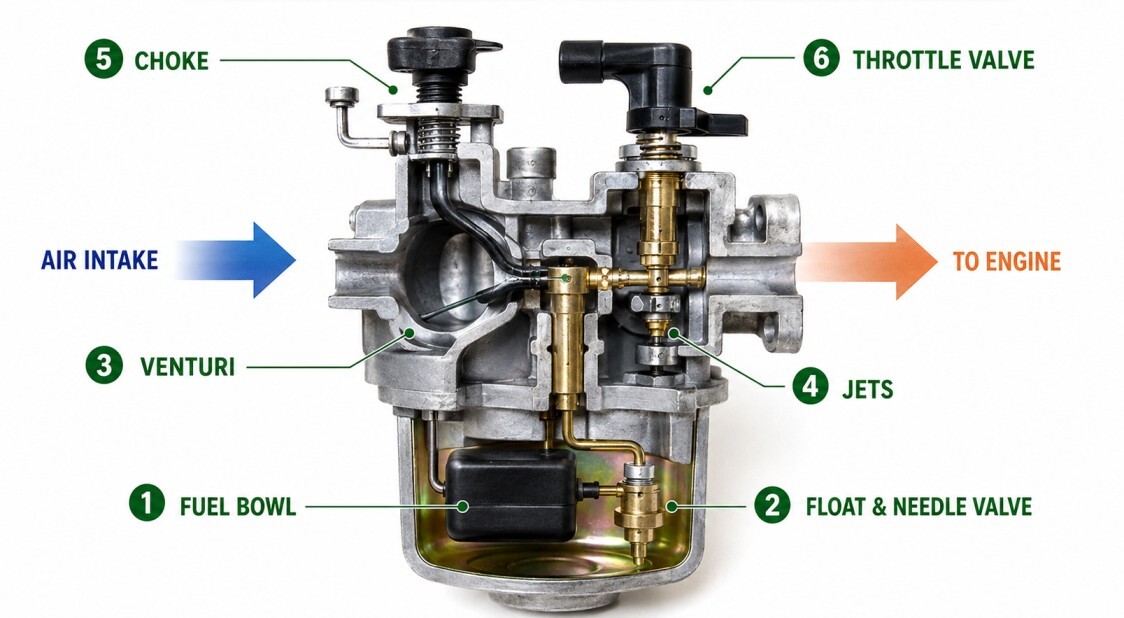
As shown in the image above, fuel is stored in the fuel bowl and regulated by the float and needle valve. Air passes through the venturi, creating suction that draws fuel through the jets to form the air-fuel mixture. The choke enriches the mixture for cold starts, while the throttle valve controls engine speed and power output.
Clogged jets, fuel contamination, or worn components can disrupt the air-fuel mixture, leading to hard starting, engine surging, reduced power, and poor overall pressure washer performance.
Shop top-quality pressure washer parts at WholeToolBox! We offer carburetors, fuel tanks, fuel lines, and fuel caps from trusted brands like Honda, Kawasaki, and Homelite for long-lasting durability.
Common Pressure Washer Carburetor Problems and Their Symptoms
The table below highlights the most common pressure washer carburetor problems, their likely causes, and the symptoms they produce.
|
Carburetor Problem |
Common Cause |
Typical Symptoms |
|
Clogged Main Jet |
Dirt, debris, or stale fuel deposits |
Pressure washer won't start, rough running, loss of power |
|
Dirty Carburetor Passages |
Fuel varnish or contamination |
Pressure washer starts, then dies, poor acceleration |
|
Stuck Float |
Debris or a worn float mechanism |
Fuel leakage, flooding, and hard starting |
|
Faulty Fuel Inlet Valve |
Wear, damage, or blockage |
Inconsistent fuel delivery, stalling |
|
Stuck Choke |
Damaged linkage or improper adjustment |
Hard starting, black smoke, poor performance |
|
Air Leaks Around Gaskets |
Worn or damaged seals |
Rough idle, pressure washer engine surging, unstable RPM |
|
Corroded Internal Components |
Water-contaminated or old fuel |
Difficult starting, reduced engine efficiency |
|
Restricted Fuel Flow |
Clogged fuel line or filter |
The pressure washer engine won't stay running |
|
Improper Fuel-Air Mixture |
Carburetor adjustment issues |
Engine surging, hesitation, poor fuel economy |
|
Worn Carburetor Components |
Long-term use and wear |
Frequent stalling, pressure washer loses power |
Steps to Diagnose Pressure Washer Carburetor Problems in Under 15 Minutes
Follow these quick checks to identify carburetor issues and decide whether cleaning, repair, or replacement is required.
Step 1: Check Fuel Quality
Inspect the fuel for signs of age, contamination, or water. Old gasoline can leave varnish deposits that clog carburetor passages and restrict fuel flow.
Step 2: Inspect the Air Filter
Remove the air filter and check for dirt, oil buildup, or blockages. Restricted airflow can mimic carburetor failure and affect engine performance.
Step 3: Verify Fuel Flow to the Carburetor
Ensure fuel moves freely through the fuel line into the carburetor. A clogged fuel filter or damaged line can cause fuel starvation and engine shutdown.
Step 4: Examine the Carburetor Exterior
Look for fuel leaks, loose mounting bolts, cracked housings, or damaged gaskets. External damage often indicates underlying carburetor problems.
Step 5: Perform a Starting Fluid Test
Spray a small amount of starting fluid into the intake and attempt to start the engine. If it starts briefly and then stalls, the carburetor is likely restricting fuel delivery.
Step 6: Check for Engine Surging
Start the pressure washer and observe the engine speed. Repeated RPM fluctuations often indicate clogged jets or an incorrect air-fuel mixture.
Step 7: Inspect the Carburetor Bowl
Remove the carburetor bowl and check for dirt, corrosion, water contamination, or fuel residue that could block fuel flow.
Step 8: Decide Between Cleaning and Replacement
Minor deposits can often be resolved by cleaning the carburetor. However, severe corrosion, damaged floats, or cracked housings usually require carburetor replacement.
Tips to Prevent Future Pressure Washer Carburetor Issues
Below are key pressure washer maintenance tips to help prevent future pressure washer carburetor issues and extend engine life.
-
Use Fresh Fuel: Avoid old gasoline, as it can form varnish deposits that clog carburetor passages and restrict fuel flow.
-
Add Stabilizer: Use a fuel stabilizer before seasonal storage to prevent fuel degradation and gum formation.
-
Drain the System: Empty the fuel tank and run the engine until the carburetor is dry before long-term storage.
-
Avoid Ethanol Fuel: High-ethanol fuels can absorb moisture and cause corrosion and fuel separation.
-
Run Periodically: Start the pressure washer occasionally to keep fuel circulating and minimize deposit buildup.
-
Store Properly: Keep the pressure washer in a dry location to prevent moisture-related corrosion in the fuel system and carburetor.
Check out the 9 best pressure washers that make deep cleaning faster and easier for home and outdoor cleaning
Summary: Diagnosing Carburetor Problems Early Can Keep Your Pressure Washer Running Reliably
Most pressure washer carburetor problems can be identified quickly by checking fuel quality, airflow, fuel delivery, and carburetor condition. Addressing issues early can help prevent costly repairs, improve engine performance, and keep your pressure washer operating efficiently for years to come.
Key Takeaways
-
A clogged or dirty carburetor is one of the most common causes of pressure washer starting and performance problems.
-
Symptoms such as engine surging, stalling, power loss, and hard starting often indicate carburetor-related issues.
-
Fuel quality should always be checked first, as stale or contaminated gasoline can restrict fuel flow.
-
Simple diagnostic steps like inspecting the air filter, fuel line, and carburetor bowl can identify many issues in under 15 minutes.
-
Minor deposits can often be fixed through pressure washer carburetor cleaning, while severe damage may require replacement.
-
Following regular pressure washer maintenance tips, including proper fuel storage and periodic operation, can help prevent future carburetor problems and extend engine life.
FAQs
Why does my pressure washer start and then die?
A pressure washer starts, then dies when fuel cannot flow consistently through the carburetor. Common causes include clogged jets, contaminated fuel, or restricted fuel passages.
How do I know if my pressure washer carburetor is bad?
Signs include hard starting, stalling, surging, rough idle, reduced power, and excessive fuel consumption.
How do you clean a pressure washer carburetor?
Remove the carburetor, clean the bowl and jets with carburetor cleaner, clear passages using compressed air, then reassemble and test operation.
Why is my pressure washer engine surging?
Pressure washer engine surging is typically caused by inconsistent fuel delivery due to dirty jets, blocked passages, or fuel contamination.
What causes a pressure washer to lose power?
A pressure washer loses power when fuel or air flow becomes restricted, the carburetor is partially clogged, or engine components are not operating efficiently.
| Disclaimer: This article is for general guidance only. Follow manufacturer recommendations and seek professional service for major repairs. |