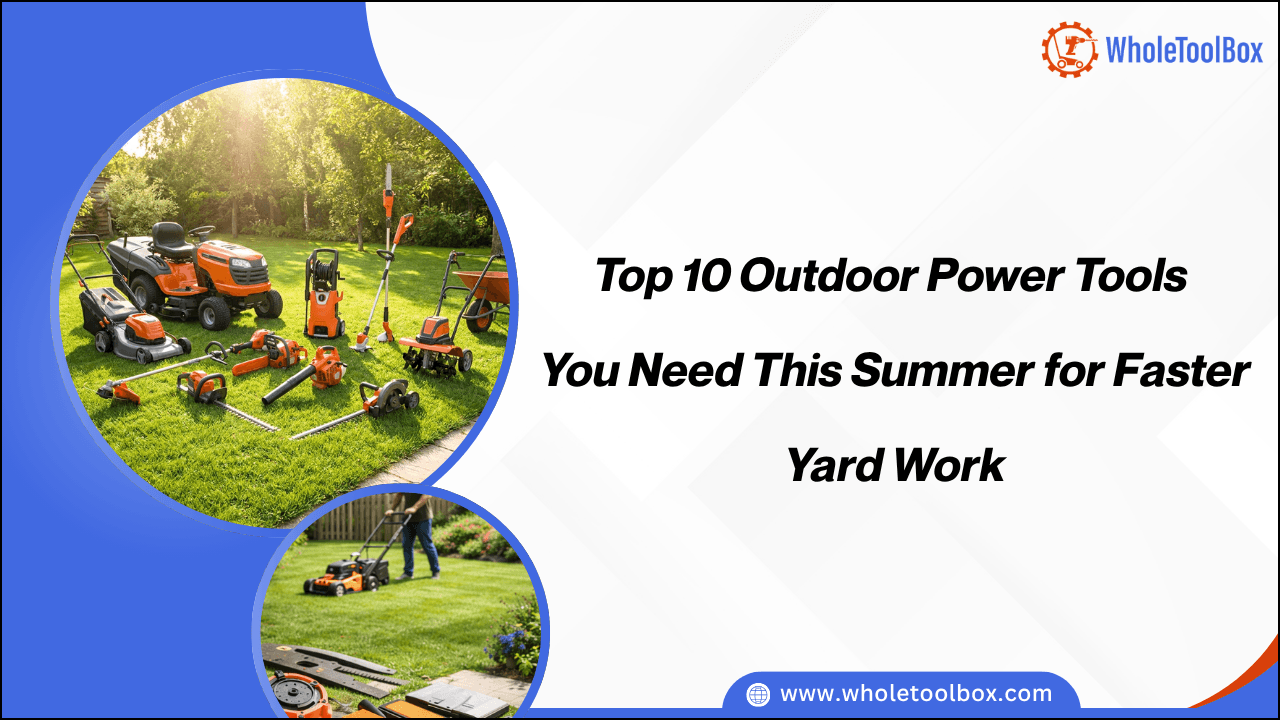
Top 10 Outdoor Power Tools You Need This Summer for Faster Yard Work
Summer is the peak season for lawn growth, garden expansion, and outdoor property maintenance across the United States. Higher temperatures and faster vegetation growth make manual yard work time-consuming and physically demanding.
Outdoor power tools significantly reduce labor intensity while improving precision and consistency in yard care. From lawn mowing to hedge trimming, modern equipment is designed to deliver faster results with less effort. Many tools now include battery-powered systems, smart controls, and ergonomic designs that improve usability and reduce fatigue.
In this blog, we cover why outdoor power tools matter, the top 10 essential tools, how to choose the right equipment, and key maintenance tips.
Why Outdoor Power Tools Are Essential for Summer Yard Work
Summer is the peak season for lawn growth, garden expansion, and outdoor property maintenance across the United States. Higher temperatures and faster vegetation growth make manual yard work time-consuming and physically demanding.
Outdoor power tools significantly reduce labor intensity while improving precision and consistency in yard care. From lawn mowing to hedge trimming, modern equipment is designed to deliver faster results with less effort. Many tools now include battery-powered systems, smart controls, and ergonomic designs that improve usability and reduce fatigue.
In addition, increased adoption of eco-friendly electric and cordless tools is helping homeowners reduce emissions, noise pollution, and fuel dependency, making yard maintenance more sustainable.
Top 10 Essential Outdoor Power Equipment Tools for Yard Maintenance
Below are the most essential outdoor power tools that significantly reduce yard maintenance time while improving precision and efficiency.
-
Lawn Mower: A lawn mower is the foundation of yard maintenance. Modern self-propelled and robotic mowers offer adjustable cutting heights, mulching functions, and smart navigation systems for uneven terrain.
-
String Trimmer: Ideal for edging and hard-to-reach areas, string trimmers help clean up borders along fences, driveways, and flower beds where mowers cannot operate efficiently.
-
Leaf Blower: A high-powered blower quickly removes grass clippings, leaves, and debris from lawns, patios, and walkways. Battery-powered models are increasingly popular due to reduced noise and emissions.
-
Chainsaw: Chainsaws are used for cutting branches, storm cleanup, and firewood. Regular maintenance and replacement of essential chainsaw parts help ensure safe and efficient cutting performance.
-
Hedge Trimmer: Used for shaping shrubs and hedges, these tools ensure precise landscaping results. Dual-action blades improve cutting speed while reducing vibration.
-
Lawn Edger: A lawn edger creates clean, defined boundaries between grass and paved surfaces, significantly improving visual appeal and landscape structure.
-
Power Washer: A power washer is essential for maintaining clean outdoor surfaces, blasting away dirt, mold, and grime from driveways, decks, patios, and siding. Electric models offer adjustable pressure settings suitable for a range of residential cleaning tasks.
-
Aerator: Lawn aerators improve soil health by allowing air, water, and nutrients to penetrate compacted ground. This results in healthier and greener grass during peak summer months.
-
Pole Saw: A pole saw extends reach for trimming high branches without the need for ladders, improving both safety and efficiency.
-
Riding Mower: Ideal for large properties, a riding mower dramatically reduces mowing time and physical effort. Modern models feature multiple cutting deck widths, cruise control, and attachments for bagging or mulching, making them a powerful upgrade for expansive lawns.
How to Choose the Right Power Tools for Your Yard
Choosing the right equipment depends on your yard size, task requirements, and power preferences. Below are the key factors to consider when selecting efficient outdoor power tools:
-
Assess Yard Size and Layout: Large properties often require riding mowers or high-capacity equipment, while smaller yards are better suited for compact or cordless tools. Consider slopes, trees, and landscaping obstacles when selecting equipment.
-
Match Tools to Your Tasks: Choose tools based on your primary yard care needs, such as mowing, trimming, pruning, leaf cleanup, or soil cultivation.
-
Choose the Right Power Source: Gas-powered tools deliver higher power and longer runtimes, while electric and battery-powered models offer quieter operation and lower maintenance.
-
Prioritize Comfort: Lightweight designs, adjustable handles, and anti-vibration features help reduce fatigue and improve control during extended use.
-
Check Battery Compatibility: Selecting tools that share the same battery platform can reduce equipment costs and simplify charging and storage.
-
Warranty Coverage: Invest in high-quality equipment with strong warranties, reliable performance, and readily available replacement parts for long-term value.
Check out Elevate your DIY projects with the best cordless power tools of 2025 for effortless home upgrades
Maintenance Tips to Extend the Life of Outdoor Power Tools
The maintenance tips are outlined below to help ensure safe operation and a longer lifespan for your outdoor power tools:
-
Clean tools after each use to remove grass, dirt, and debris buildup
-
Sharpen blades regularly for cleaner and more efficient cutting performance
-
Inspect cords, batteries, and fuel systems for wear or leaks before operation
-
Store tools in a dry, covered area to prevent rust and weather damage
-
Charge batteries properly and avoid overcharging to extend battery lifespan
-
Replace air filters, spark plugs, and oil as recommended by the manufacturer
-
Tighten loose screws, bolts, and moving parts to maintain safe operation
Find out how to protect your lawn from summer heat and drought damage, prevention, and recovery tips
Summary: Outdoor Power Tools for Efficient Summer Yard Care in the U.S.
Outdoor power tools help U.S. homeowners handle fast summer lawn growth with less effort and better precision. Choosing the right equipment based on yard size and tasks improves efficiency and long-term value. Regular maintenance ensures better performance, safety, and longer tool lifespan.
Key Takeaways
-
Outdoor power tools significantly reduce manual effort and improve yard maintenance efficiency during summer.
-
Choosing equipment based on yard size, terrain, and tasks ensures better performance and cost savings.
-
Battery-powered and electric tools are increasingly preferred due to low noise and eco-friendly operation.
-
Proper ergonomics and battery compatibility improve usability and reduce long-term ownership costs.
-
Regular maintenance, such as cleaning, sharpening, and storage, extends tool lifespan.
Looking for Outdoor Equipment Parts? WholeToolBox offers a wide range of high-quality replacement components, including air filters, spark plugs, carburetors, fuel filters, and ignition coils to keep your outdoor power equipment running at peak performance.
References:
https://www.nyserda.ny.gov/Featured-Stories/Electric-Yard-Equipment-Buyers-Guide
FAQs
What safety gear should I use with outdoor power tools?
Always use protective gear such as safety goggles, gloves, ear protection, and sturdy footwear. For heavy-duty tools like chainsaws or hedge trimmers, a face shield and cut-resistant clothing are recommended.
Can outdoor power tools be used in wet conditions?
Most electric and battery-powered tools should not be used in wet or rainy conditions due to the risk of electric shock and reduced performance. Always check the manufacturer’s safety guidelines before operation.
How do I store cordless power tools during off-season months?
Store tools in a cool, dry place after fully cleaning them. Remove batteries, charge them to around 40 to 60%, and keep them separately to maintain battery health.
What is the average lifespan of outdoor power tools?
With proper maintenance, most outdoor power tools last 5 to 10 years. Battery-powered tools may require battery replacement every 2 to 4 years, depending on usage and charging habits.
|
Disclaimer: This content is for informational purposes only. Always follow the manufacturer’s instructions and safety guidelines when using or maintaining outdoor power tools. |