Next-Gen Winter Tech Operations: Electric Snow Throwers & Automated Energy Solutions
Winter maintenance is entering a new era as electric and automated snow removal technologies reshape how snow is cleared from homes, businesses, and public spaces. Rising energy costs, environmental concerns, and increasingly unpredictable winter weather are accelerating the shift away from traditional gas-powered equipment. Modern snow throwers now combine efficient electric motors, advanced batteries, and intelligent automation to deliver cleaner, quieter, and more reliable performance. This blog explores how next-generation snow throwers and automated systems are improving efficiency, reducing operational effort, and setting new standards for energy-efficient winter operations.
How Modern Snow Throwers Technology Is Transforming Winter Maintenance in 2026
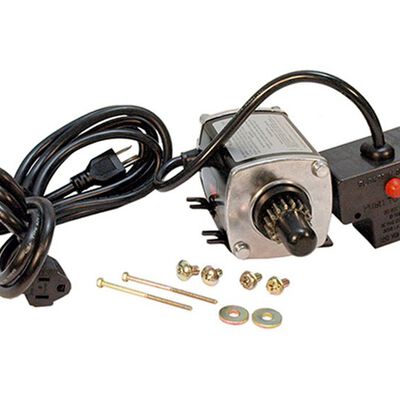
Modern snow thrower technology is transforming winter maintenance across homes, businesses, and public spaces. Driven by unpredictable snowfall and rising demand for convenience, snow throwers are evolving into efficient electric-powered machines with smarter designs. Modern models now include electric starters for faster cold-weather ignition, reducing setup time and improving user convenience during extreme winter conditions.
The following key aspects—changing winter conditions, the shift from gas to electric, improved clearing efficiency, and user-focused design, are collectively transforming snow removal in 2026.
Growing Demand Driven by Changing Winters
Snowfall patterns are becoming more unpredictable, affecting both traditional cold regions and areas that previously experienced minimal snow. This has increased the need for reliable winter maintenance tools among homeowners, businesses, and municipalities.
Shift from Gas to Electric Snow Throwers
Battery-powered snow throwers are rapidly replacing gas models due to improvements in lithium-ion batteries and brushless motors. Modern electric units now deliver comparable clearing power without exhaust fumes, excessive noise, or frequent maintenance.
Performance and Efficiency Improvements
Features such as two-stage augers, self-propelled drives, and variable-speed controls allow today’s snow throwers to handle deeper and heavier snow more effectively. These advancements reduce clearing time while improving energy efficiency.
Smarter and More User-Friendly Design
Modern snow throwers focus heavily on ease of use, offering push-button starts, ergonomic handles, LED lighting, and simplified controls. Some advanced models also include smart monitoring or automated assistance, improving safety and convenience during long winter storms.
Key Innovations Powering Next-Generation Snow Removal Technology
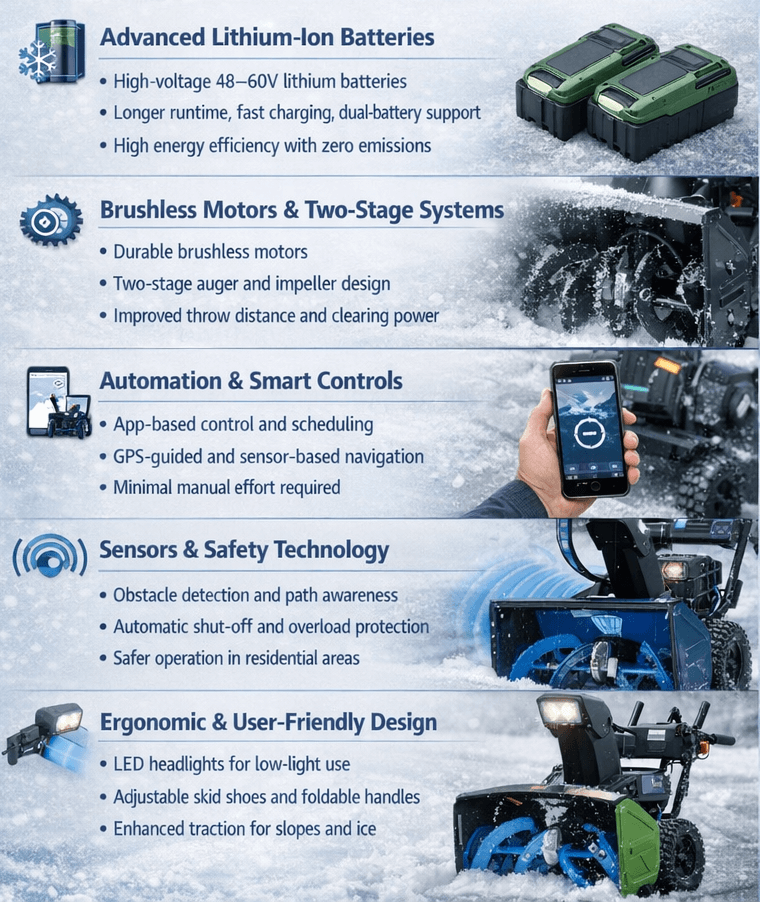
Next-generation snow removal technology combines advanced batteries, smart automation, and efficient motor systems to deliver faster and cleaner performance. These innovations enhance clearing power, improve safety, and reduce manual effort across residential and commercial applications. Refer to the image below for a visual overview of these key innovations.
Benefits of Next-Generation Snow Throwers for Efficient Snow Removal
Next-generation electric snow throwers and automated systems are transforming winter maintenance by making snow clearing faster, safer, and more energy-efficient. Below are the key benefits that set them apart from traditional gas-powered snow blowers:
-
Higher Energy Efficiency: Electric snow throwers convert most battery power directly into clearing force, minimizing energy loss. Intelligent motor control adjusts output based on snow density, allowing more area to be cleared per charge while lowering operating costs.
-
Lower Environmental Impact: These systems produce no tailpipe emissions, improving air quality and reducing greenhouse gases. Even on conventional electricity grids, electric blowers have a much smaller carbon footprint than gas models.
-
Quieter Operation: Electric models operate around 65 to 75 dB, significantly quieter than gas blowers. This allows early-morning or late-night snow clearing without disturbing neighbors, making them ideal for residential and urban areas.
-
Low Maintenance: Push-button starts, lightweight designs, and simple controls make operation effortless. With no oil changes, spark plugs, or carburetor upkeep, maintenance is minimal, saving time and money.
-
Enhanced Safety: Self-propelled drive, adjustable auger heights, directional chutes, and LED lights improve control and reduce strain. Protective features like skid shoes also prevent damage to surfaces while clearing efficiently.
-
Scalability for Large-Scale Operations: Automated and electric snow throwers support efficient clearing across large residential, commercial, or municipal areas. Smart scheduling and consistent performance reduce labor requirements and improve overall winter safety.
Check out the top 10 snow blower accessories that make winter cleanup easier while boosting efficiency with essential winter tools
Challenges and Limitations of Automated and Electric Snow Removal Systems
The table below summarizes the key challenges and limitations associated with automated and electric snow removal systems. It highlights technical, operational, and adoption-related constraints for both types of technologies.
|
Challenge Area |
Automated / Robotic Snow Removal |
Battery-Powered Electric Snow Removal |
|
Battery Runtime & Cold Weather |
Battery performance drops sharply in extreme cold; large areas often need multiple recharge cycles |
Typical 25 to 60 min runtime; cold reduces output, may need spare batteries |
|
Handling Heavy & Wet Snow |
Struggles with plow-packed or wet snow |
Best for light to moderate snow; performance drops beyond ~12″ or sticky snow |
|
Cost & Battery Replacement |
High initial cost due to AI, sensors, and mapping; battery replacement adds long-term expense |
Mid- to high-range ($300 to $1,000+); batteries last 3 to 5 years, low running costs |
|
Charging Needs |
Requires docking stations, consistent power, and sometimes network connectivity |
Easy for home use; larger setups may need multiple chargers |
|
Technical Complexity |
Requires setup, mapping, app updates, and monitoring; obstacles may confuse systems |
Users manage charging, settings, and safety; simpler to operate |
|
Technology Maturity |
Emerging; may need human supervision. |
Not fully hands-free, depends on snow conditions |
|
Safety & Liability |
Collision risks in public or residential spaces demand advanced fail-safes |
Built-in safety features are needed; misuse can cause damage |
Check out snow blower maintenance: how to fix common issues to learn simple tips for troubleshooting issues and keeping your snow blower running all winter smoothly
Conclusion: Redefining Winter Maintenance with Electric and Automated Technology
Electric snow throwers and automated systems are revolutionizing winter maintenance by offering cleaner, quieter, and energy-efficient snow removal. Combining advanced motors, high-capacity batteries, and smart automation, they deliver precise and consistent performance for homes, businesses, and municipal spaces. Ongoing improvements in battery life, automation, and user-friendly design make next-generation snow throwers a practical, reliable solution for efficient winter operations.
Key Takeaways
-
Electric snow throwers offer high energy efficiency with lower operating costs
-
Zero-emission operation improves air quality and supports sustainability goals
-
Quieter performance makes them suitable for residential and urban environments
-
Low maintenance requirements reduce long-term ownership effort and expenses
-
Automation enhances safety, consistency, and labor efficiency
-
Continued innovation is expanding adoption across residential and commercial markets
Summary:
Electric and automated snow throwers are reshaping winter maintenance by offering quieter operation, zero emissions, and improved energy efficiency. Advances in battery technology, smart controls, and user-friendly design deliver reliable performance with lower maintenance needs, while ongoing innovation continues to expand their use across residential and commercial settings.
Shop now for high-quality snow blower parts at WholeToolBox. We offer durable components for top brands like Ariens, Lawn Boy, and Snapper. From idler pulleys and auger belts to axle bushings, our parts help restore efficiency, extend equipment life, and keep your snow blower running at peak performance.
References:
https://riverwoodhealthcare.org/snow-removal-safety/
https://www.utahsafetycouncil.org/uploads/PDFs/Snow-Blower-Safety.pdf
FAQs
What’s the difference between a 12/3 and a 14/3 outdoor extension cord?
A 12/3 cord has thicker wires and supports more current, typically up to 20 amps, while a 14/3 cord supports up to 15 amps. Using the correct cord ensures safety and proper performance for outdoor tools.
What clothing should be avoided when operating a snow thrower?
Avoid loose clothing, scarves, drawstrings, and baggy sleeves, as they can get caught in moving parts. Wear fitted winter gear and slip-resistant boots for safe operation.
How should clogs be cleared safely from a snow thrower?
Always turn off the machine and wait for all moving parts to stop. Use a clearing tool or stick and never use your hands or feet.
How much snow can an electric snow thrower handle?
Most electric snow throwers can handle 6 to 12 inches of light to moderate snow. Heavy or wet snow may require multiple passes or a more powerful model.