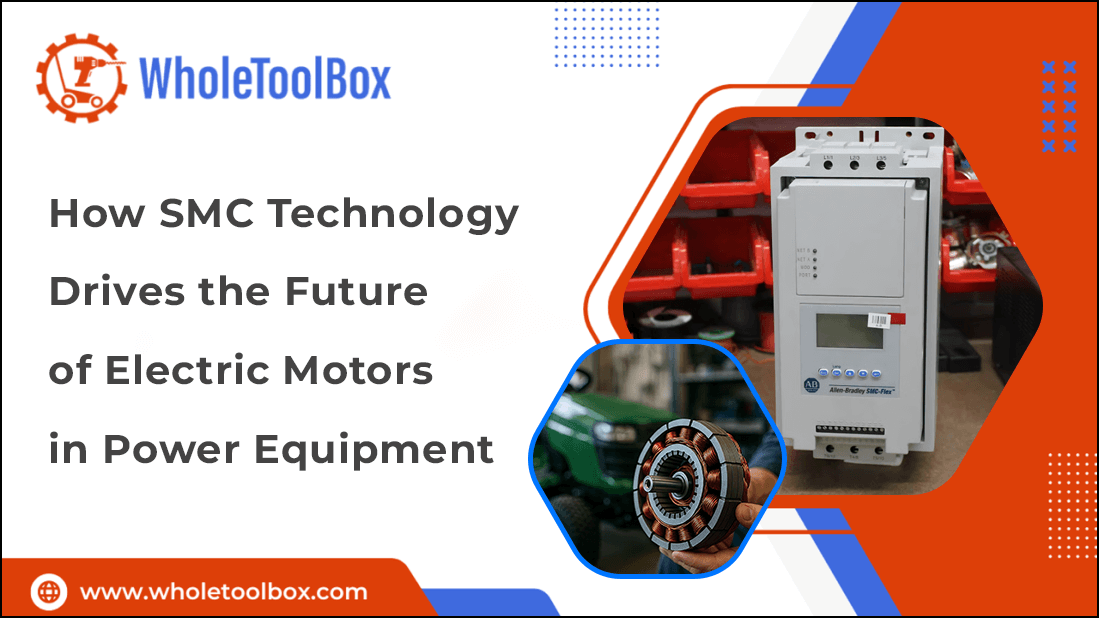
How SMC Technology Drives the Future of Electric Motors in Power Equipment
SMC technology is revolutionizing the development of electric motors in power equipment by offering enhanced efficiency, durability, and performance. As industries move toward cleaner and more sustainable energy solutions, the need for lightweight, durable, and thermally efficient motor components is at an all-time high.
Sheet Molding Compound (SMC) materials provide these advantages by improving insulation, reducing weight, and optimizing heat dissipation. These improvements lead to longer-lasting motors with better energy efficiency, helping manufacturers meet growing environmental and performance standards. With its unique properties, SMC technology is set to drive the next generation of electric motors, making power equipment smarter, more efficient, and environmentally friendly.
What is SMC Technology and Why It Matters in Electric Motors
Sheet Molding Compound (SMC) technology is a composite material made from resin, fillers, and chopped glass fibers, delivering a strong yet lightweight solution. In power tools, where electric motors need to be compact, efficient, and durable, SMC offers several advantages that traditional materials often can’t match.
Why SMC Technology Matters in Electric Motors:
-
Lightweight Design: SMC reduces the overall weight of power tool motors, making tools easier to handle and less fatiguing during extended use.
-
Excellent Electrical Insulation: SMC’s insulating properties protect sensitive motor components from electrical faults, enhancing safety and performance.
-
Improved Heat Dissipation: Power tools often run at high speeds, generating heat; SMC helps dissipate this heat effectively, preventing motor overheating.
-
Resistance to Wear and Corrosion: SMC withstands harsh working conditions like dust, moisture, and impact, ensuring motors last longer.
-
Complex Moldability: The ability to mold SMC into precise shapes enables designers to create compact, efficient motor parts that integrate seamlessly into ergonomic tool designs.
Manufacturers are developing power tool electric motors that are lighter, more effective, and more adapted to satisfy the needs modern consumers by utilizing SMC technology.
How SMC Technology Enhances Performance in Power Tool Motors
SMC technology improves power tool motors by boosting efficiency and ensuring durability in demanding conditions. Its distinctive characteristics contribute to enhanced overall performance.
-
Vibration Dampening: High-speed motor vibrations are absorbed and reduced by SMC's composite nature, which makes operation smoother and component wear lower.
-
Noise Reduction: SMC materials contribute to quieter motor function by minimizing mechanical noise, enhancing user comfort during prolonged use.
-
Higher Mechanical Strength: SMC’s toughness supports motor parts that withstand mechanical stress and impact, reducing the chance of cracks or failures during heavy-duty applications.
-
Enhanced Dimensional Stability: Components made with SMC maintain their shape and structural integrity under temperature changes and mechanical loads, ensuring consistent motor performance.
-
Improved Energy Efficiency: By optimizing the motor’s magnetic and structural properties, SMC helps reduce energy consumption without sacrificing power output.
These performance enhancements make SMC-based motors ideal for power tools that demand durability, precision, and user comfort in challenging working environments.
Applications of SMC Technology in Modern Power Equipment
SMC technology is widely used in power equipment to enhance motor efficiency, durability, and design flexibility.Its distinctive properties make it well-suited for a wide range of industrial applications.
Electric Motors in Cordless Power Tools
Compact, lightweight, and powerful electric motors are necessary for cordless power tools, including drills, saws, and grinders.SMC materials are ideal for these applications because they:
-
Reduce the weight of motor housings and components, improving tool portability and user comfort.
-
Provide superior electrical insulation, which protects the motor’s internal parts and ensures safer operation.
-
Enhance heat dissipation to prevent overheating during intensive or prolonged use, extending motor life.
-
Allow intricate molding of parts to optimize motor design, maximizing power output within a limited space.
By incorporating SMC components, cordless power tools deliver high performance with greater energy efficiency, meeting the needs of professionals and DIY enthusiasts alike.
Industrial Power Equipment
In larger-scale industrial power equipment such as compressors, pumps, and conveyor systems, SMC technology plays a crucial role in improving reliability and efficiency:
-
SMC’s resistance to corrosion and chemical exposure helps motors operate reliably in harsh industrial environments.
-
The material’s mechanical strength supports components exposed to constant vibration and heavy loads.
-
Thermal management through SMC reduces downtime caused by motor overheating and failures.
-
Custom molded SMC parts allow for design flexibility, enabling equipment manufacturers to optimize space and improve assembly efficiency.
These advantages increase overall operating productivity by lowering maintenance costs and extending the equipment's service life.
Outdoor Power Equipment
Power equipment used outdoors, like leaf blowers and chainsaws, faces exposure to moisture, dust, and temperature variations. SMC technology is particularly valuable here due to:
-
It has excellent moisture resistance, preventing damage from rain or dew.
-
Resistance to dirt and dust infiltration, protecting sensitive motor parts.
-
UV protection, which helps preserve the look and structural integrity even after extended exposure to the sun.
-
Impact resistance, enabling components to withstand accidental drops or rough handling during outdoor use.
As a result, electric motors and other parts made from SMC ensure outdoor equipment remains durable and reliable in varying weather conditions.
Renewable Energy Systems
The growing renewable energy sector also benefits from SMC technology in electric motors used for wind turbines, solar trackers, and battery systems:
-
Lightweight SMC parts reduce the overall weight of motor assemblies, facilitating easier installation and reducing structural load.
-
Superior insulation properties improve electrical efficiency, critical for energy generation and storage devices.
-
System lifespan is increased by resistance to environmental stresses like humidity and temperature fluctuations.
-
The ability to mold complex geometries enables better integration of motors into compact renewable energy systems.
This helps renewable energy solutions become more efficient, cost-effective, and durable, supporting the global shift to sustainable power sources.
Check out this article on the ultimate checklist for spotting problems in commercial outdoor power equipment to ensure your tools run smoothly and avoid costly downtime.
Key Benefits of SMC Technology in Electric Motors
SMC technology enhances electric motors by boosting performance, efficiency, and durability in power equipment. Here are the key benefits with real-world examples:
Lightweight Construction
SMC materials are significantly lighter than metals traditionally used in motor components, which reduces the overall weight of power tools.
-
Example: Bosch’s cordless drills use SMC components in their motor housings to deliver powerful performance while keeping the tool lightweight and easy to handle during extended use.
Superior Electrical Insulation
SMC provides excellent insulation, which minimizes energy loss and protects motor components from electrical faults.
-
Example: In DeWalt’s brushless motors, SMC parts help maintain efficient electrical insulation, resulting in longer motor life and improved safety during high-demand applications.
Enhanced Thermal Management
The heat dissipation capabilities of SMC prevent overheating, allowing motors to operate at higher speeds without damage.
-
Example: Makita integrates SMC in their power tool motors to improve heat management, enabling longer continuous use without motor overheating, especially in heavy-duty cutting tools.
Corrosion and Chemical Resistance
SMC’s resistance to moisture, chemicals, and corrosion ensures durability in harsh working conditions.
-
Example: STIHL’s outdoor power equipment, like chainsaws and trimmers, uses SMC components to withstand exposure to dirt, moisture, and oil, extending motor and tool life.
Design Flexibility
SMC’s moldability allows manufacturers to create complex, compact motor parts that optimize space and improve ergonomics.
-
Example: Milwaukee’s M18 fuel series utilizes SMC to design compact motor housings, allowing powerful motors to fit into smaller, more ergonomic tool bodies without sacrificing performance.
By leveraging these benefits, manufacturers are pushing the boundaries of what power tools and equipment can achieve, providing users with more efficient, durable, and comfortable products.
Future Trends and Innovations in SMC Technology for Electric Motors
SMC technology continues to evolve, driving improvements in electric motor performance and sustainability. Here are the key trends shaping its future:
-
Advanced Material Formulations: Development of SMC composites with nano-fillers and high-performance resins improves strength, thermal conductivity, and electrical insulation, enabling motors to handle more demanding conditions.
-
Sustainable Materials: Bio-based resins and recycled fibers are being used to create eco-friendly SMCs, reducing environmental impact without sacrificing durability or efficiency.
-
Smart Integration: Embedding sensors within SMC components allows real-time monitoring of motor temperature, vibration, and health, enabling predictive maintenance and enhancing reliability.
-
3D Printing and Customization: Additive manufacturing with SMC materials enables rapid production of complex, tailored motor parts, shortening development times and expanding design possibilities.
-
Broader Industry Applications: SMC technology is extending beyond power tools into electric vehicles, robotics, and aerospace, where lightweight, durable electric motors are critical for performance and efficiency.
These innovations position SMC as a key material in developing the next generation of electric motors that are more efficient, durable, and environmentally friendly.
Explore this article on automotive bearings in 2025: the latest innovations driving change to discover how cutting-edge technologies are enhancing equipment performance.
Final Thoughts
SMC technology is set to transform electric motors in power equipment by driving improvements in efficiency, durability, and performance. As the demand for greener and more effective power solutions grows, embracing SMC innovations will be crucial for manufacturers to stay competitive and meet future challenges. Ultimately, SMC technology not only enhances motor performance but also paves the way for a more sustainable and resilient power equipment industry.
Looking for top-quality parts to maintain your outdoor power equipment? WholeToolBox offers durable components like chainsaw chains, trimmer heads, and aerators from leading brands such as Poulan, Echo, and STIHL to keep your tools in peak condition.
References:
https://pmc.ncbi.nlm.nih.gov/
https://legacy.www.sbir.gov/
FAQs
How does SMC technology influence axial flux motor design?
SMC enables complex, compact geometries ideal for axial flux motors. This improves power density and efficiency while reducing motor size.
Why is SMC more thermally efficient than metal laminations?
Its structure helps dissipate heat evenly, allowing motors to run cooler under high loads and minimizing thermal stress on components.
How cost-effective is SMC for large-scale motor manufacturing?
While raw SMC materials may cost more, they reduce assembly complexity, part count, and energy losses, often lowering total system costs over time.