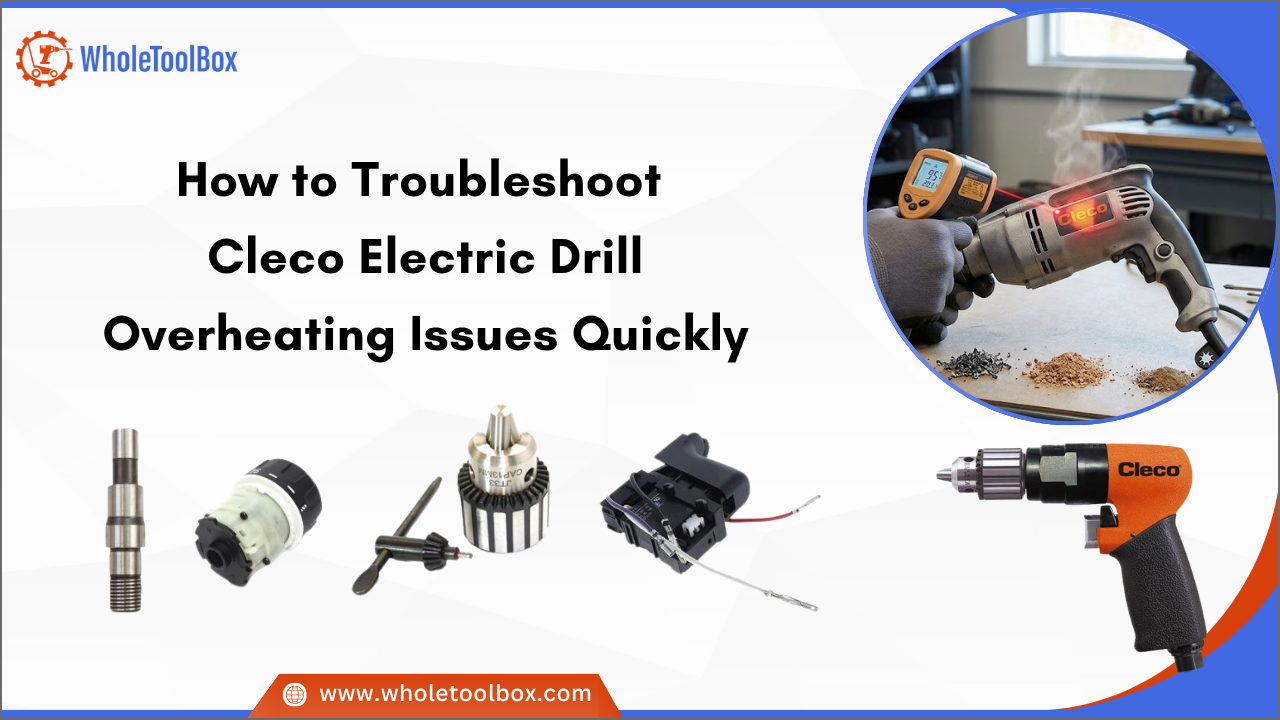
How to Troubleshoot Cleco Electric Drill Overheating Issues Quickly
Is your Cleco electric drill overheating or shutting down unexpectedly? These issues often indicate excessive heat buildup inside the motor, which can affect drilling performance, reduce efficiency, and increase the risk of component failure if not addressed promptly.
Common causes of overheating include blocked air vents that restrict cooling airflow, worn carbon brushes that create excessive electrical resistance, faulty bearings that increase friction, overloaded drilling applications that strain the motor, and unstable power supply conditions. In some cases, worn or damaged Cleco replacement parts for electric drills can further contribute to heat buildup and reduced performance.
In this blog, you'll learn how to identify overheating causes, troubleshoot the problem, and apply maintenance practices to reduce heat buildup and extend your electric drill's lifespan.
What Causes a Cleco Electric Drill to Overheat?
Cleco electric drills overheat when heat builds up faster than the tool can dissipate it. This is usually due to overload, restricted airflow, worn components, or unstable power supply. The most common causes are outlined below.
-
Continuous Heavy-Duty Operation: Prolonged use under heavy load increases motor strain and rapidly raises internal temperature, especially when drilling hard materials without allowing cooling breaks.
-
Blocked Ventilation: Dust, debris, and grease can clog air vents, restricting airflow and trapping heat inside the Cleco front housing, which reduces cooling efficiency.
-
Worn Internal Parts: Worn carbon brushes and bearings increase internal resistance and friction, forcing the motor to work harder and generate excess heat.
-
Electrical Issues: Unstable voltage, loose connections, or undersized extension cords disrupt power flow, causing higher current draw and leading to overheating.
Looking for Cleco electric drill parts to keep your tools performing at peak efficiency? We offer high-quality power tool replacement parts, including plungers, screws, drill shut-off valves, clutch components, gears, and throttle valve kits.
Common Signs of Electric Drill Overheating Problems
The common signs of electric drill overheating problems are listed in the table below. These indicators help identify early-stage issues before they lead to serious Cleco drill motor damage or complete tool failure.
|
Warning Sign |
Possible Cause |
Effect on Drill Performance |
|
Motor housing becomes extremely hot |
Continuous heavy-duty use |
Reduced efficiency and possible motor burnout |
|
Burning smell from vents |
Overheated windings or worn brushes |
Risk of insulation damage |
|
Sparks near the brush area |
Carbon brush wear or commutator damage |
Increased electrical resistance and heat |
|
The drill suddenly shuts off |
Thermal overload protection activated |
Temporary loss of operation |
|
Reduced drilling power |
Motor overload or internal friction |
Slower drilling speed and torque loss |
|
Grinding or rough noises |
Bearing or gearbox wear |
Increased friction and overheating |
Step-by-Step Troubleshooting for Cleco Electric Drill Overheating
Follow the steps below to quickly identify and resolve overheating issues in a Cleco electric drill. Start with basic external checks before moving toward internal inspection.
Step 1: Disconnect Power and Allow the Drill to Cool
Switch off and unplug the drill completely, then allow the motor to cool before inspection. Continuous overheating or automatic shutdown usually indicates excessive internal heat buildup or thermal overload activation.
Step 2: Inspect and Clean Ventilation Ports
Check air intake and exhaust vents for dust, metal chips, or debris. Restricted airflow is a leading cause of overheating because it prevents proper heat dissipation. Clean vents using compressed air to restore normal cooling performance.
Step 3: Check Carbon Brushes
Inspect carbon brushes for wear, sparking signs, or uneven surfaces. Worn brushes increase resistance and reduce electrical efficiency, which directly contributes to excess heat buildup in the motor.
Step 4: Inspect Drill Bit and Operating Load
Verify that the drill bit is sharp and suitable for the material. Dull or incorrect bits increase resistance, forcing the motor to draw higher current and generate excess heat during operation.
Step 5: Check Bearings and Lubrication
Rotate the chuck by hand to ensure smooth movement. Any stiffness or grinding indicates bearing wear or insufficient lubrication, both of which increase friction and cause overheating under load.
Step 6: Inspect Electrical Supply and Connections
Examine the power cord, plug, and extension cable for damage or looseness. Poor connections or voltage drops can force the motor to overcompensate by drawing more current, increasing internal temperature.
Step 7: Run a Short Controlled Test
Operate the drill under light load for a short period. If it heats up quickly, vibrates unusually, or loses speed stability, the issue may involve internal motor damage such as armature or winding faults.
Step 8: Replace Faulty Components or Seek Professional Service
If overheating persists after completing the previous checks, inspect the motor windings, armature, and internal electrical components. Replace damaged parts according to Cleco service guidelines or have the drill evaluated by a qualified technician to prevent further motor damage.
Check out Power tool maintenance: The ultimate guide for better performance and longer tool life
How to Prevent Future Electric Drill Overheating Issues
Overheating issues can be prevented with proper maintenance and proper operating practices. The key prevention measures are listed below.
-
Cleaning Air Vents: Keep ventilation openings free from dust, metal chips, and debris. Blocked airflow traps heat inside the motor housing, quickly raising operating temperature and reducing efficiency.
-
Overloading the Drill: Do not force the drill beyond its rated capacity. Applying excessive pressure or using oversized bits increases motor load, which leads to higher current draw and heat buildup.
-
Correct Speed Setting: Always match drilling speed to the material. Incorrect RPM settings increase friction and strain the motor, especially during metal or high-density material drilling.
-
Lubricate Components: Proper lubrication of Cleco rotor bearing and gearbox parts reduces internal friction. Without it, resistance increases, forcing the motor to work harder and generate more heat.
-
Cooling Breaks: During extended or heavy-duty use, take short breaks to allow the motor to cool naturally. Continuous operation without pauses is a common cause of thermal overload.
Summary: Keeping Your Cleco Electric Drill Running Efficiently
Overheating of a Cleco electric drill can be effectively managed with proper maintenance, correct usage, and early detection of issues. Most failures are preventable when airflow, load, lubrication, and electrical conditions are properly maintained.
Key Takeaways
-
Keep vents clean to maintain proper airflow and prevent heat buildup
-
Avoid overloading the drill to reduce motor strain and overheating risk
-
Use correct speed settings to minimize friction and improve efficiency
-
Lubricate bearings and gearbox to reduce internal resistance
-
Replace carbon brushes early to maintain stable performance and reduce heat
-
Inspect the Cleco spindle regularly for wear or damage to prevent vibration and performance loss
-
Ensure a stable power supply with properly rated cords and connections
FAQs
Why does my Cleco drill heat up so fast?
Rapid heating usually happens due to overload, poor airflow, dull drill bits, or worn internal components. These conditions force the motor to work harder and generate excess heat in a short time.
How often should vents be cleaned?
Vents should be cleaned regularly, especially in dusty or industrial environments. Clean airflow paths help maintain proper cooling and prevent internal heat buildup during operation.
Is it safe to use an overheated drill?
No. Stop using the drill immediately if it overheats. Continued operation can damage motor windings, reduce performance, or cause permanent failure.
Can carbon brushes cause overheating?
Yes. Worn carbon brushes reduce electrical contact efficiency, leading to sparking, resistance, and increased motor temperature.
Why does my drill smell like burning?
A burning smell typically indicates overheated windings, excessive brush wear, or electrical overload. It is a warning sign that the tool needs immediate inspection.
|
Disclaimer: This blog is for informational purposes only. Always follow the manufacturer's instructions and safety recommendations when servicing your drill. |