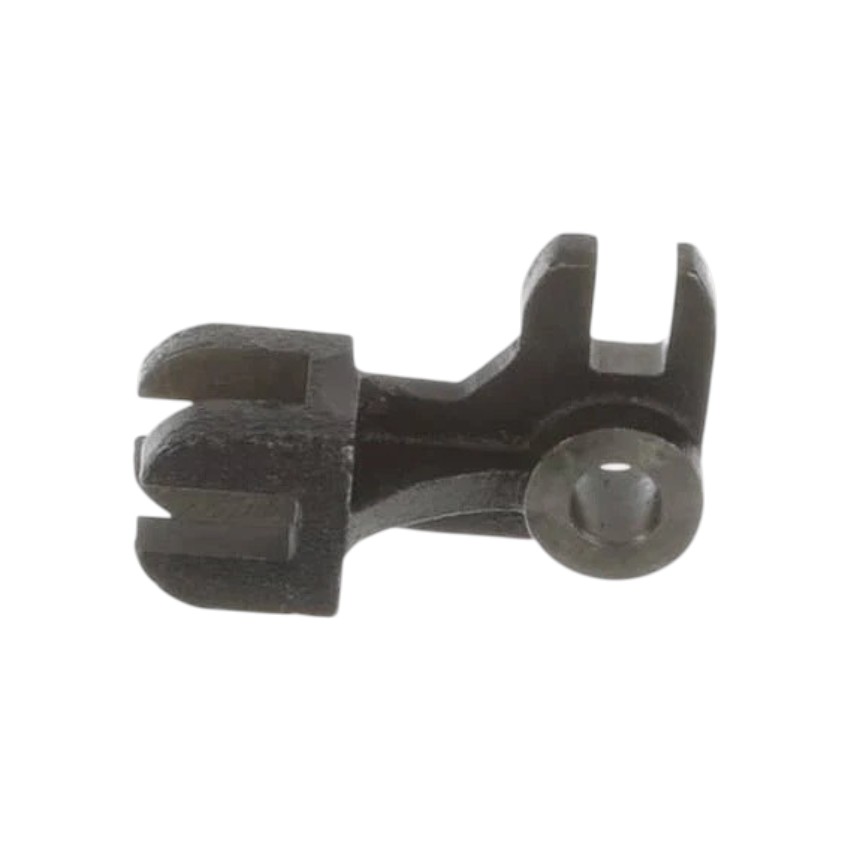
JET JT9-JH-T12 Planer Jointer Ball Crank
Specifications:
| Attribute | Details |
|---|---|
| Part Number | JT9-JH-T12 |
| Brand | JET |
| Component Type | Ball Crank |
| Equipment Type | Planer/Jointer |
Description
Product Overview:
Provides manual rotational control for the infeed table adjustment mechanism. The JET JT9-JH-T12 Planer Jointer Ball Crank gives the operator a hand-operated crank and ball grip for applying rotation to the connected mechanical components during machine setup and material preparation.
Manual Motion Transfer:
Transfers manual rotational input from the operator to the planer/jointer's adjustment mechanism. The ball crank provides a hand-operated point for turning the adjustment system and converting the applied rotation into mechanical movement within the connected table adjustment assembly.
Infeed Table Position Control:
Controls the positioning of the infeed table through rotation of the connected adjustment mechanism. Turning the ball crank changes the table position within its adjustment range, providing direct mechanical control during material preparation.
Replacement Guidelines:
Replacement of the JET JT9-JH-T12 Planer Jointer Ball Crank when cracks, damage, looseness, or excessive play prevents proper transfer of rotational movement to the table adjustment mechanism. Inspect the crank connection, mounting point, shaft interface, and related adjustment components for wear or damage.
Common Failure Symptoms:
- Ball crank becomes loose during table adjustment.
- Crank or ball grip shows visible damage.
- Rotation does not properly move the infeed table.
- Excessive play occurs at the crank connection.
- Manual table adjustment becomes difficult or inconsistent.
Equipment Compatibility:
Verify that part number JT9-JH-T12 matches the existing component before purchase. Confirm the planer/jointer model, crank configuration, mounting arrangement, and existing part number to help ensure proper fit within the infeed table adjustment assembly.
-
What is the JET JT9-JH-T12 Planer Jointer Ball Crank used for?
It provides a hand-operated means of applying rotational input to the infeed table adjustment mechanism.
-
What should I check if turning the ball crank does not move the infeed table?
Inspect the crank connection, mounting point, shaft interface, and related adjustment components for looseness, damage, wear, or improper engagement.
-
Why can excessive play develop at a ball crank connection?
Looseness or wear at the crank connection or mounting interface can create excessive movement and make manual adjustment less consistent.
-
How does a damaged ball crank affect manual table adjustment?
A cracked or damaged crank may make rotation difficult or prevent the applied movement from being properly transferred to the connected adjustment mechanism.
-
What should be examined before installing a replacement crank?
Check the crank and ball grip for visible damage, then inspect the mounting point, shaft interface, and related adjustment components for wear or damage.
Customer Reviews
No reviews yet. Be the first to write one!
Write a Review
We strive to provide our customers with a hassle-free and efficient shopping experience. Our shipping policy ensures the timely delivery of your orders and complete customer satisfaction. View More
We are committed to ensuring your complete satisfaction with every purchase. We understand that circumstances may arise where you must return a product or request a refund. If for any reason you are not satisfied, you may return the item(s) according to the terms outlined below. View More
This Payment Policy outlines the terms and conditions governing all payments made for products purchased through our website. By making a purchase, you agree to be bound by this Payment Policy. View More