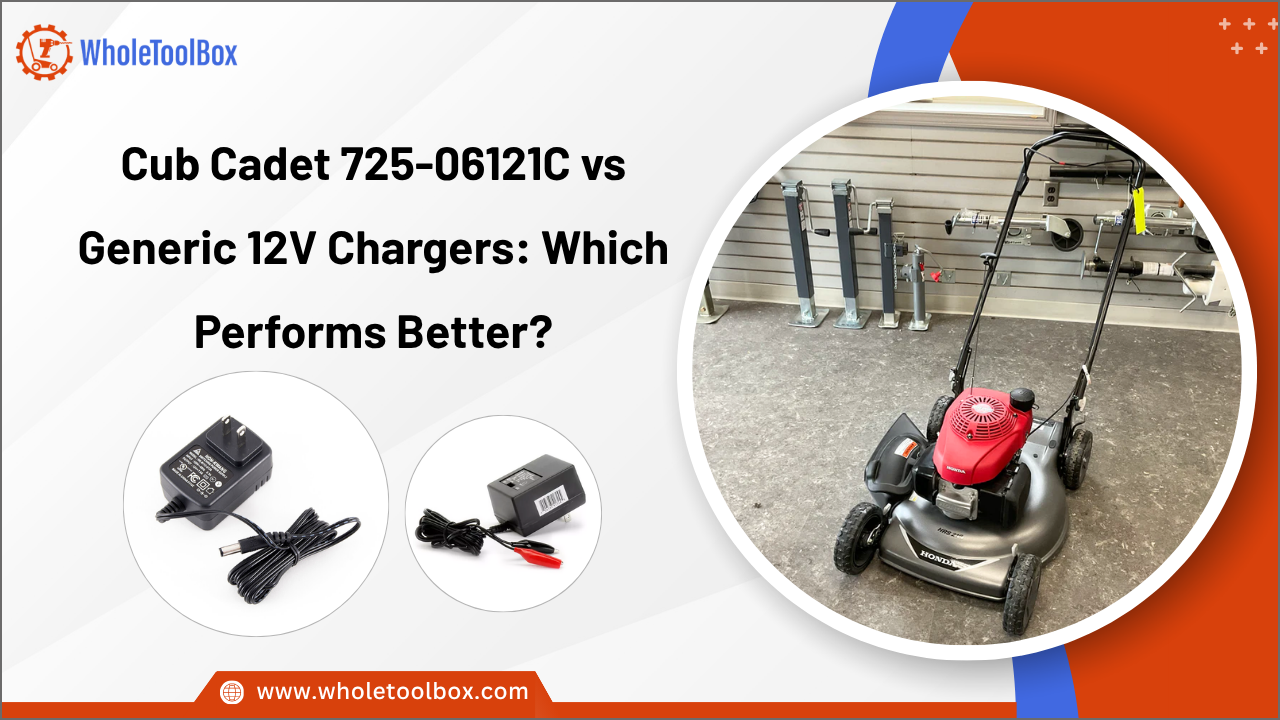
Cub Cadet 725-06121C vs Generic 12V Chargers: Which Performs Better?
Is your lawnmower not holding a charge? This is one of the most common issues owners run into, especially after long storage or irregular charging habits. In many cases, the problem isn’t the mower itself but how the battery is being charged and maintained.
When these issues appear, the type of charger you use makes a big difference. With the Cub Cadet battery charger, users often report problems like weak starts after storage, slow charging, or a battery that won’t hold a charge. On the other hand, generic 12V chargers are usually used when batteries are completely drained or when a single charger is needed for multiple types of equipment.
In this blog, we break down the Cub Cadet 725-06121C and generic 12V chargers, their key differences, and the most common charging issues that affect lawn mower performance and battery life.
Understanding the Cub Cadet 725-06121C Battery Charger
The Cub Cadet 725-06121C charger is designed to safely charge and maintain 12V batteries used in Cub Cadet lawn mowers and other compatible outdoor equipment. It delivers a controlled, low-amp charge that helps extend battery life and ensures good performance, especially during storage.
Below, we discuss how it works in detail and why its multi-stage charging system is more efficient than standard chargers.
How the Cub Cadet 725-06121C Charger Works
The Cub Cadet 725-06121C 12V battery charger uses an automatic multi-stage process to safely charge and maintain your lawn mower battery by adjusting output based on battery condition at each stage.
-
Bulk Charge: Restores most of the battery’s power quickly, bringing it up to about 70–80% capacity. This stage delivers a higher, controlled current to recover energy efficiently when the battery is deeply discharged.
-
Absorption Charge: Slows down the charging rate as the battery nears full capacity. It carefully tops off the remaining charge while preventing heat buildup and protecting internal battery components from stress.
-
Float Mode: Maintains the battery at full charge using a very low, stable voltage. This allows the charger to stay connected for long periods without the risk of overcharging or damaging the battery.
Overall, this automatic system ensures efficient charging, reduces manual monitoring, and helps improve long-term battery life.
Looking for lawn mower parts to keep your equipment running smoothly? We offer high-quality lawn equipment parts, including regulators, belts, spindles, air filters, and more, for better performance.
What Generic 12V Chargers Offer for Outdoor Equipment
The following features highlight how generic 12V chargers support efficient battery charging and maintenance for outdoor power equipment.
-
Multi-Stage Charging Technology: Most modern 12V chargers use multi-stage charging (bulk, absorption, float) to deliver power safely and improve battery life. This controlled process helps avoid overcharging and keeps the battery in better long-term condition.
-
Battery Compatibility: Generic chargers often support multiple battery types, such as flooded, AGM, gel, and sometimes lithium. This makes them suitable for different outdoor equipment without needing separate chargers for each battery type.
-
Built-In Safety Features: Many chargers include protections like reverse polarity protection, short-circuit prevention, thermal monitoring, and automatic shutoff. These features help protect both the battery and charger during use.
-
Easy-to-Use Connection Options: They usually come with simple connectors such as alligator clips or ring terminals. This allows quick connection to most 12V batteries used in lawn mowers and outdoor tools.
-
Charging Status Indicators: LED lights or digital displays are commonly included to show charging progress. These indicators make it easier to know when the battery is charging or fully charged.
-
Affordable Pricing and Accessibility: Generic 12V chargers are available at a wide range of prices, from budget-friendly basic models to advanced smart chargers. This makes them a cost-effective option for most users of outdoor equipment.
Check out 10 essential tips for extending your lawnmower battery life and improving overall efficiency.
Cub Cadet 725-06121C vs Generic Chargers: Key Performance Comparison
The table below provides a quick comparison of Cub Cadet 725-06121C with generic manual and smart chargers.
|
Feature |
Cub Cadet 725-06121C |
Generic Manual Charger |
Generic Smart Charger |
|
Voltage |
12V (mower-specific) |
12V (manual setting) |
6V / 12V (auto/manual) |
|
Charge Rate |
Low-amp, battery-matched |
6–10A (manual control required) |
1–10A (auto-adjusting) |
|
Auto Shut-Off |
Automatic float/maintenance mode |
No |
Yes |
|
AGM Battery Support |
Limited (no dedicated AGM mode) |
Often incompatible |
Model-dependent support |
|
Desulfation Mode |
No |
No |
Yes (on select models) |
|
Ease of Use |
Plug-and-play |
Requires supervision |
Plug-and-play |
|
Winter Maintenance |
Short-term maintenance only |
Not safe unattended |
Yes (float mode supported) |
|
Price Range |
~$45–$50 |
~$15–$30 |
~$40–$80 |
|
Battery Damage Risk |
Low (purpose-built for mower batteries) |
Medium–High |
Low (if properly configured) |
|
Best For |
Routine lawn mower maintenance |
Short-term or emergency charging |
Long-term storage & battery maintenance |
Check out the lawn mower battery guide: What you need to know from purchase to maintenance for better performance.
Common Cub Cadet 725-06121C Battery Charging Problems and How it Impacts Battery Life
Below are some of the most common charging issues users may face with the Cub Cadet battery charger and how they can affect lawn mower battery performance and lifespan:
Problem 1: Cub Cadet Battery undercharging and incomplete charge cycles
If the battery is removed before reaching a full charge, it may stay partially charged for long periods. This commonly happens when the charging time is shortened or interrupted too early.
Impact: Partial charging leads to sulfation buildup inside the battery, reducing cranking power and causing weaker mower starts over time.
Problem 2: AGM compatibility limitations with Cub Cadet Battery systems
Some AGM lawn mower batteries require a charging profile specifically designed for sealed battery technology. Using a charger without AGM optimization may affect charging efficiency.
Impact: Improper charging gradually reduces battery capacity and can shorten overall battery lifespan.
Problem 3: Charging interruptions caused by poor connections in Cub Cadet Battery setups
Loose, dirty, or corroded battery clamps can interrupt the charging process. Even a working charger may fail to deliver a steady current if the connection is unstable.
Impact: Incomplete charging cycles can lead to repeated starting issues and inconsistent mower performance.
Problem 4: Environmental impact on Cub Cadet Battery charging performance
Charging the battery in damp, unstable, or poorly ventilated outdoor storage areas can affect charging consistency. Temperature fluctuations and weak connections also contribute to uneven charging.
Impact: Reduced charging efficiency can lead to unreliable battery performance when the mower is needed.
Problem 5: Risks of leaving the Cub Cadet Battery on charge for extended periods
Leaving the battery connected to the charger for excessive periods without monitoring may place unnecessary stress on the internal battery components.
Impact: Continuous stress can slowly reduce usable battery capacity and affect long-term performance.
Problem 6: Damage caused by deep discharge in Cub Cadet Battery storage conditions
Batteries that remain fully drained for long periods require longer charging times to recover. Severe discharge conditions make it harder for the battery to regain normal performance.
Impact: Prolonged low-voltage conditions increase sulfation risk and may lead to permanent battery damage.
You can get Cub Cadet parts for lawn mower repair and maintenance with fast shipping and the right replacement components online to keep your equipment running at peak performance.
Summary: Which 12V Charger Is the Better Choice for Your Equipment?
The Cub Cadet 725-06121C is ideal for Cub Cadet mower batteries, offering safe multi-stage charging and simple operation. Generic smart chargers provide more features, wider compatibility, and better long-term maintenance, while manual chargers are cheaper but require careful monitoring.
Key Takeaways
-
The Cub Cadet 725-06121C uses bulk, absorption, and float charging stages to improve battery lifespan.
-
Generic smart chargers often include auto-shutoff, desulfation, and winter-maintenance features.
-
Manual generic chargers are affordable but carry a higher risk of overcharging and battery damage.
-
Cub Cadet low battery issues can often be caused by poor charging practices, such as undercharging or loose terminal connections, which can shorten battery life.
-
Ensure timely Cub Cadet battery replacement to maintain equipment reliability and avoid unexpected downtime.
FAQs
How do I charge the battery on my Cub Cadet?
Turn off the machine first. Connect the red clamp to positive (+) and the black to negative (–). Set a 12V charger and plug it in. Let it charge fully, then unplug before removing clamps.
What are common mistakes when recharging batteries?
Using the wrong voltage, overcharging, or reversing terminals are common errors. Charging in extreme heat or cold can also reduce battery life and performance.
How to tell if a battery charger is faulty?
No charging light, no output, overheating, or unusual noise can indicate a bad charger. Testing it with another battery can confirm the issue.
How do I reset a battery charger?
Unplug it for a few minutes, then reconnect. Some chargers also reset by switching modes or disconnecting and reattaching the battery.
|
Disclaimer: This content is for informational purposes only. Always refer to your Cub Cadet manual before charging or replacing any battery, as specifications and performance may vary by model and usage conditions. |