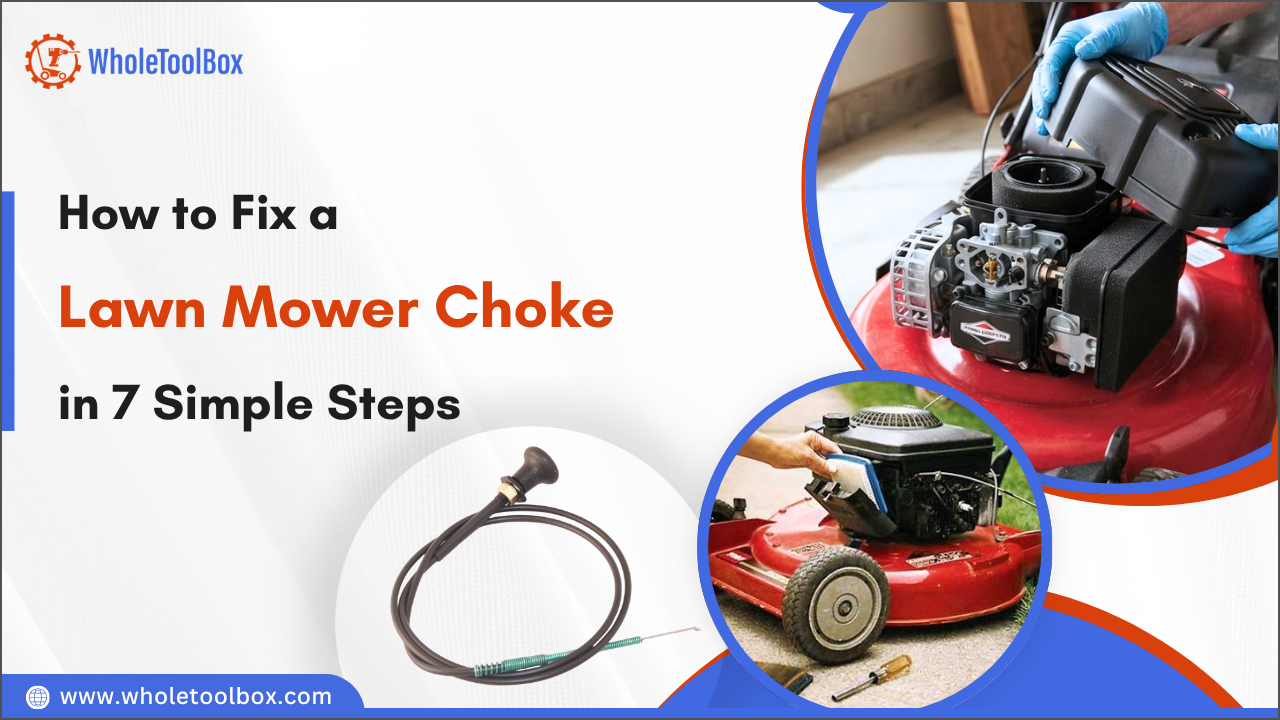
How to Fix a Lawn Mower Choke in 7 Simple Steps
Is your lawn mower difficult to start or stalling shortly after it starts? A faulty choke may be the cause. Your lawn mower relies on a properly functioning choke to provide the right air-fuel mixture during cold starts. By restricting airflow, the choke helps the engine start more easily and run smoothly until it reaches operating temperature.
A stuck or damaged lawn mower choke can lead to hard starting, rough idling, black exhaust smoke, poor fuel economy, and frequent stalling. Fortunately, most choke problems can be fixed with basic tools and routine maintenance.
In this blog, you'll learn how a lawn mower choke works, common choke problems and their causes, seven simple steps to fix it, and maintenance tips to keep your mower running efficiently.
|
Table of Contents: |
Understanding How a Lawn Mower Choke Works
The choke is an important component of a gasoline-powered lawn mower engine. During a cold start, it temporarily restricts airflow into the carburetor, allowing a richer fuel mixture to enter the combustion chamber. This extra fuel helps the engine start more easily.
As the engine warms up, the choke gradually opens, restoring the normal air-fuel ratio required for smooth and efficient operation. A properly functioning choke provides several important benefits:
- Maintains the correct air-fuel mixture during engine warm-up.
- Reduces engine stalling immediately after startup.
- Improves fuel efficiency during normal operation.
- Helps reduce unnecessary wear on engine components.
- Supports smoother acceleration and consistent engine performance.
Shop lawn equipment parts at WholeToolBox. We offer high-quality lawn mower replacement parts like deck belts, drive pulleys, starters, fuses, relays, and more to keep your equipment running efficiently.
Common Lawn Mower Choke Problems and Their Causes
Below are the five most common lawn mower choke problems, their causes, and the recommended solutions.
Problem: Engine Won't Start When Cold
If your lawn mower is difficult to start or requires several pulls when the engine is cold, the choke may not be supplying the richer air-fuel mixture needed for ignition.
- Possible Cause: The choke is stuck in the open position, allowing too much air into the carburetor during startup.
- Recommended Solution: Inspect the choke linkage for damage or misalignment. Clean the mechanism and adjust it so the choke closes fully during cold starts.
Problem: Black Smoke from the Exhaust
Black smoke from the exhaust is a clear sign that the engine is burning more fuel than necessary. You may also notice a strong fuel smell, rough running, or reduced engine performance.
- Possible Cause: The choke remains closed after the engine has warmed up, creating an overly rich air-fuel mixture.
- Recommended Solution: Clean the choke assembly and ensure it opens completely once the engine reaches operating temperature. Replace worn choke components if needed.
Problem: Engine Stalls After Starting
The mower starts normally but shuts off within a few seconds or runs unevenly before stalling. This usually happens because the engine cannot maintain the correct air-fuel mixture after startup.
- Possible Cause: A sticking choke or dirty carburetor prevents the engine from maintaining the correct air-fuel mixture.
- Recommended Solution: Clean the lawn mower carburetor and choke plate to remove dirt, fuel residue, and debris. Replace damaged components if cleaning does not resolve the issue.
Problem: Choke Lever Is Difficult to Move
If the choke lever feels stiff, sticks in one position, or requires extra force to operate, the choke mechanism is not moving freely. This can prevent the choke from opening or closing properly.
- Possible Cause: Grass clippings, rust, dirt buildup, or worn linkage components restrict the choke mechanism's movement.
- Recommended Solution: Clean the linkage and pivot points, apply lubricant where recommended, and replace bent or worn linkage parts to restore smooth operation.
Problem: Poor Fuel Economy
If your lawn mower uses more fuel than usual, runs rough at idle, or feels sluggish during operation, the choke may be affecting the engine's air-fuel mixture.
- Possible Cause: The choke remains partially closed due to worn springs, damaged linkage, or a faulty automatic choke, causing the engine to run with an incorrect air-fuel mixture.
- Recommended Solution: Inspect the choke springs, linkage, and automatic choke assembly for wear or damage. Replace faulty components and clean the carburetor to restore proper engine performance.
How to Fix a Lawn Mower Choke in 7 Simple Steps
The following steps will help you inspect the choke, identify the problem, and restore smooth engine operation.
Step 1: Disconnect the Spark Plug
Turn off the engine, remove the ignition key, and disconnect the spark plug wire before beginning any repairs. This simple safety step prevents accidental engine startup and helps protect you while working on the mower.
Step 2: Inspect the Choke Lever
Move the choke lever between the open and closed positions to ensure it operates smoothly without sticking. Check for loose, bent, or damaged components, and lubricate the moving parts if they feel stiff.
Step 3: Remove the Air Filter
Take off the air filter cover and inspect the filter for dirt, oil, or damage. A clogged air filter restricts airflow and can cause symptoms similar to a faulty choke, so replace it if necessary.
Step 4: Examine the Choke Plate
Inspect the choke plate to ensure it opens and closes freely when the choke lever is moved. Clean away dirt and fuel deposits using carburetor cleaner to restore smooth movement and proper airflow.
Step 5: Clean the Carburetor
Remove dirt, varnish, and fuel residue from the carburetor using a quality carburetor cleaner. Cleaning the carburetor improves fuel flow and often resolves common choke-related starting and performance issues.
Step 6: Check the Choke Linkage and Springs
Inspect the choke linkage, rods, and springs for rust, wear, or damage that could affect movement. Replace any faulty components and lubricate the pivot points to ensure the choke operates correctly.
Step 7: Test the Lawn Mower
Reconnect the spark plug wire and air filter, then start the engine to verify the repair. The mower should start easily, idle smoothly, and transition off the choke without stalling or producing black smoke.
Check out Smart gardening for homeowners: How technology is transforming lawn and garden care for smarter outdoor maintenance
When to Repair the Choke and When to Replace Parts
Use the table below to determine the appropriate course of action based on the condition of your choke system.
|
Issue |
Repair the Choke |
Replace the Part |
|
Dirt, grass, or fuel residue restricting movement |
Clean the choke plate and linkage with carburetor cleaner. |
Replacement is usually not necessary. |
|
Sticky choke linkage |
Lubricate and adjust the linkage if it moves freely after cleaning. |
Replace only if the linkage is bent or damaged. |
|
Loose mounting screws or fasteners |
Tighten or replace the hardware to restore proper alignment. |
Replacement of the choke assembly is not required. |
|
Light surface rust |
Remove corrosion and apply a suitable lubricant. |
Replace only if rust has caused significant damage. |
|
Weak or misaligned return spring |
Reposition or adjust the spring if possible. |
Replace the spring if it has lost tension or is broken. |
|
Cracked or warped choke plate |
Repairs are generally ineffective. |
Install a new choke plate for proper airflow control. |
|
Bent choke shaft or severely worn linkage |
Straightening may not restore reliable operation. |
Replace the damaged shaft or linkage components. |
|
Automatic choke no longer opens or closes correctly |
Cleaning may help only if dirt is the cause. |
Replace the automatic choke assembly if it has failed. |
|
Severe corrosion, excessive wear, or physical damage |
Repairs are unlikely to last. |
Replace the affected components to ensure reliable performance. |
Check out low maintenance lawn alternatives using ground cover plants for dry climates that thrive with minimal care
Summary: Prevent Future Lawn Mower Choke Problems
A properly functioning choke is essential for reliable starts, smooth engine performance, and efficient fuel consumption. Routine inspections, seasonal cleaning, and prompt replacement of worn choke components can prevent common starting issues while extending the lifespan of your lawn mower.
Key Takeaways
- Understand how the choke controls the air-fuel mixture during cold starts.
- Inspect the choke system regularly for dirt, corrosion, and worn linkage.
- Follow the seven repair steps to diagnose and fix common choke problems.
- Replace damaged springs, choke plates, or carburetor components when necessary.
- Perform routine maintenance to improve reliability, reduce repair costs, and extend engine life.
FAQs
Why is my lawn mower choke stuck open?
A lawn mower choke may become stuck open because of dirt, rust, a damaged linkage, or a weak spring. When this happens, too much air enters the engine during a cold start, making the mower difficult to start.
Can a bad choke keep a lawn mower from starting?
Yes. A faulty choke can prevent a lawn mower from starting, especially when the engine is cold. If it does not close properly, the engine will not get the richer fuel mixture needed for startup.
How do I know if my lawn mower choke needs adjustment?
Signs of a choke that needs adjustment include hard starting, black exhaust smoke, rough running, stalling after startup, or poor fuel efficiency. If the choke plate does not open and close fully, it should be adjusted.
Can I fix a lawn mower choke without replacing the carburetor?
Yes. Many choke problems can be solved by cleaning the choke and carburetor, lubricating the linkage, adjusting the choke, or replacing worn parts. A carburetor replacement is only needed if it is badly damaged.
How often should I inspect my lawn mower choke?
Inspect the choke as part of your regular lawn mower maintenance. Checking it before the mowing season and cleaning it when servicing the air filter or carburetor can help prevent starting and performance problems.
|
Disclaimer: This blog is for informational purposes only. Always follow your lawn mower owner's manual and safety instructions before inspecting or repairing the choke. |