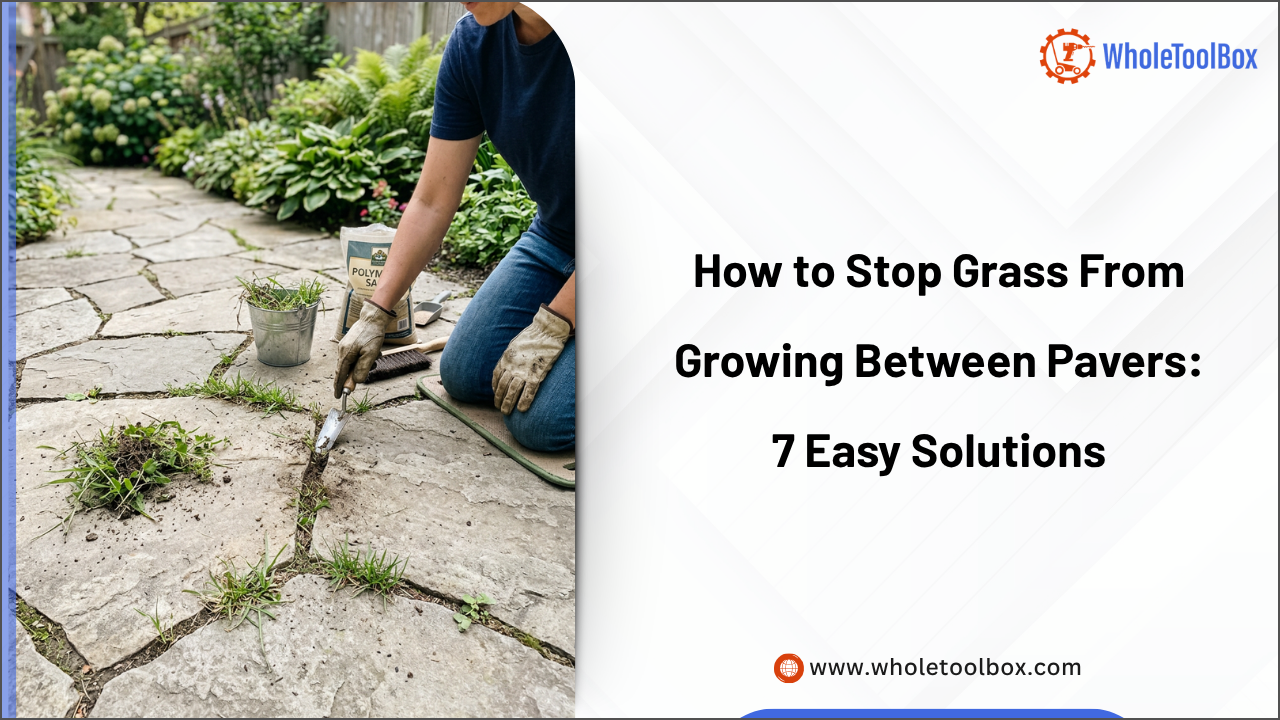
How to Stop Grass From Growing Between Pavers: 7 Easy Solutions
Is grass growing between your pavers and making your patio, driveway, or walkway look untidy? Those small patches can quickly spread when seeds settle into damp, debris-filled joints.
Removing the visible grass is only the first step. Without proper joint maintenance, new seeds can quickly take root in the same spaces. Choosing the right removal method can help clear existing growth while minimizing damage to the pavers and joint material.
This blog covers seven easy ways to remove grass between pavers, along with practical prevention and maintenance tips. From manual removal and boiling water to polymeric sand and regular sweeping, these solutions can help keep paver joints cleaner and more stable.
|
Table of Contents: |
Why Does Grass Grow Between Pavers?
Grass usually grows between pavers when windblown seeds, bird-dispersed seeds, or seeds carried by people settle into the joints. Dust, soil, leaves, pollen, and other organic debris can accumulate in these gaps, creating a suitable growing medium. Moisture from rain and dew, combined with sunlight, encourages seeds to germinate and establish roots.
Over time, established grass can make paver maintenance more difficult. Growing roots may disturb joint material, while removing mature weeds can pull out sand and widen the gaps. This can reduce joint stability and contribute to shifting or uneven pavers.
Check out creative landscaping ideas for small front yards to instantly boost curb appeal & practical ways to improve your yard’s appearance
7 Easy Ways to Stop Grass From Growing Between Pavers
Here are seven practical ways to remove grass from paver joints and restore a cleaner surface.
- Manual Hand-Pulling and Paving Knives: Pull grass by hand when the joints are slightly damp to loosen the roots more easily. For stubborn growth, use a paving knife or crack-weeding tool to cut through roots in narrow joints. Remove as much of the root system as possible to reduce regrowth.
- The Boiling Water Method: Carefully pour boiling water directly onto grass and weeds to damage plant tissue and cause the growth to wilt. Use heat-resistant gloves and eye protection, and keep children and pets away from the treatment area.
- High-Acidity Vinegar and Salt DIY Spray: For spot treatment, mix 1 litre of white vinegar with 2 tablespoons of salt and a small amount of dish soap. Vinegar damages foliage, salt promotes dehydration, and dish soap helps the solution coat the leaves.
Warning: Avoid acidic mixtures on limestone, travertine, marble, and other acid-sensitive natural stone, as they may cause etching or surface damage.
- Propane Weed Torches: A propane weed torch uses controlled heat to damage grass and weeds growing in paver joints. Briefly expose the vegetation to heat rather than attempting to burn it completely.
Safety: Open flames create a fire risk. Keep the torch away from dry vegetation, mulch, wood, and other combustible materials.
- Herbicides (Systemic and Non-Selective): Herbicides can help control persistent or widespread grass. Systemic products move through the plant toward the roots, while non-selective products can damage most vegetation they contact.
- Tactical Pressure Washing: Pressure washing can remove grass, moss, dirt, and organic debris from paver joints. Use controlled pressure and an appropriate spray angle to avoid removing excessive joint sand. Refill joints with suitable material if significant sand is displaced.
- Shovel Removal and Sod Stripping: For severely overgrown areas, use a flat-edged shovel to cut through the grass and root layer. Remove the turf and roots in manageable sections. Although labor-intensive, this method provides a clean surface for restoring and stabilizing the paver joints.
Choosing the Right Grass Removal Method for Your Pavers
The best removal method depends on the amount of grass, how deeply the roots are established, the type of paver, and the condition of the joint material, as explained below.
- For Small Patches: Hand-pulling or a paving knife is usually practical for removing isolated grass without disturbing surrounding pavers.
- For Widespread Growth: Pressure washing, herbicides, or controlled heat may be more suitable for larger areas with persistent growth.
- For Severely Overgrown Areas: Shovel removal and sod stripping can clear extensive growth and prepare the area for joint restoration.
- For Sensitive Pavers: Avoid acidic solutions or high heat on materials that may be vulnerable to staining, etching, or thermal damage.
- Consider Joint Condition: If grass removal leaves gaps or displaces joint sand, refill and stabilize the joints to reduce opportunities for new growth.
Preventive Measures to Stop Grass Growth Between Pavers
Below are effective ways to make paver joints less favorable for recurring grass and weed growth.
- Install Polymeric Sand: Fill paver joints with polymeric sand to stabilize the joints, reduce erosion, and limit spaces where weed seeds can settle.
- Utilize Geotextile Fabric: For new installations, place geotextile fabric beneath the aggregate base to separate soil from the paving system and help block vegetation growth from below.
- Ensure Proper Slope and Drainage: Maintain proper grading so water drains away from the pavers. A slope of about 2%, or 1 inch per 4 feet, is commonly used to reduce standing moisture that can encourage unwanted growth.
Check out low maintenance lawn alternatives using ground cover plants for dry climates for more landscaping ideas
Summary: Keep Your Pavers Clean, Stable, and Well-Maintained
Keeping grass out of paver joints requires more than removing visible growth. Combining effective removal methods with proper joint stabilization, drainage, and routine cleaning can help reduce recurring problems. Regular maintenance also protects the appearance, stability, and longevity of your paved surfaces.
Key Takeaways
- Remove grass early before roots become firmly established.
- Choose a removal method that suits the size and severity of the growth.
- Use polymeric sand to help stabilize paver joints and limit weed growth.
- Maintain proper drainage to prevent excessive moisture between pavers.
- Sweep regularly to remove soil, leaves, and organic debris from joints.
- Inspect pavers periodically and address new grass growth promptly.
Shop high-quality lawn & garden equipment parts at WholeToolBox, including lawn mower blades, belts, carburetors, trimmer heads, and leaf blower parts for efficient equipment maintenance and repairs.
References:
https://extension.psu.edu/indicator-weeds-provide-insight-into-growing-a-better-lawn
FAQs
Can grass growing between pavers damage the pavers?
Yes. Grass roots can grow into and disturb the joint material, potentially widening gaps and contributing to shifting or uneven pavers over time. Prompt removal helps limit root-related damage.
How often should I check paver joints for grass growth?
Inspect paver joints every few weeks during the growing season and after periods of heavy rain. Early detection makes grass easier to remove before roots become deeply established.
|
Disclaimer: This content is for informational purposes only. Follow product instructions and safety precautions to avoid injury or damage to pavers. |