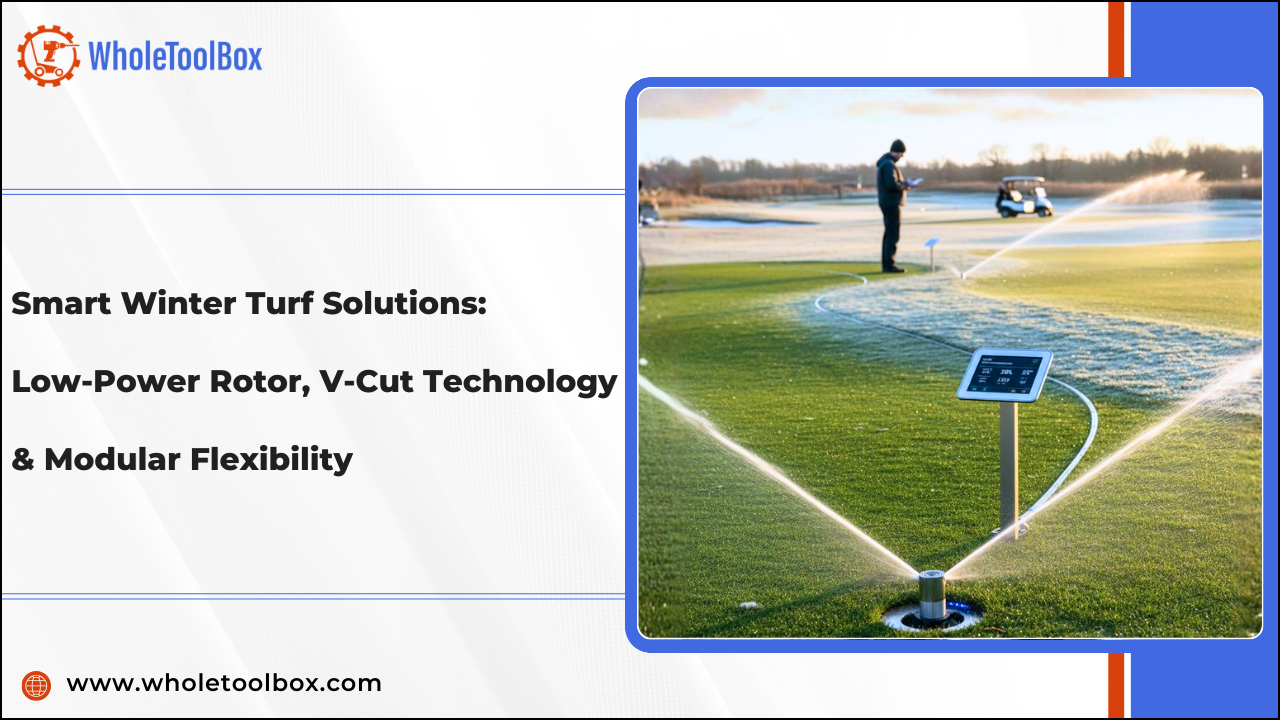
Smart Winter Turf Solutions: Low-Power Rotor, V-Cut Technology & Modular Flexibility
Winter can be tough on lawns, but smart winter turf solutions help homeowners and landscapers maintain healthy grass even in cold, harsh conditions. Low-power rotors ensure efficient operation while minimizing energy use, making winter lawn care easier and more environmentally friendly. These systems are designed to handle frost, snow, and compacted soil without damaging delicate turf.
V-cut technology allows for precise, clean cuts that promote strong root growth and reduce stress on grass. Modular flexibility makes it simple to adjust equipment for lawns of different sizes or shapes, ensuring every area receives optimal care. Together, these innovations offer a smarter, more reliable approach to winter lawn maintenance and protection.
How Low-Power Rotors Improve Winter Lawn Care
Low-power rotors provide efficient, precise airflow across your lawn while using minimal energy. They maintain consistent performance, supporting grass health and even growth during winter.
Their gentle operation ensures every part of the lawn receives care without stressing the turf.
-
Consistent Airflow Across the Lawn: Low-power rotors distribute air evenly across the lawn, preventing frost pockets and ensuring all areas are properly aerated, which supports winter grass survival.
-
Energy-Efficient Operation: They consume minimal power while maintaining effectiveness, reducing both energy costs and carbon footprint during extended winter use.
-
Reduced Compaction and Turf Stress: Unlike high-speed rotors, low-power rotors gently move over the grass, minimizing soil compaction and protecting fragile winter root systems.
-
Debris and Light Snow Management: These rotors handle leaves, small branches, and light snow with precision, keeping lawns clean without damaging delicate blades.
-
Improved Microclimate for Grass: By circulating air gently, low-power rotors reduce frost accumulation and maintain a slightly warmer microclimate, helping grass survive harsh temperatures.
-
Quiet and Smooth Winter Operations: Their low-speed design allows for quieter operation, making winter maintenance less disruptive and easier to manage for residential lawns.
The Benefits of V-Cut Technology for Healthy Lawns
V-Cut technology is designed to provide precise, clean cuts that improve both the health and appearance of your lawn. Its advanced design ensures even growth, reduces stress on grass, and enhances overall turf resilience, especially during colder months.
-
Precision Cutting: V-Cut blades create uniform, clean cuts that prevent tearing or shredding of grass blades.
-
Improved Winter Grass Health: Maintains optimal blade height in winter, reducing stress and promoting stronger roots.
-
Enhanced Air and Water Penetration: The V-cut pattern allows better airflow and water absorption to the soil.
-
Uniform Grass Growth: Ensures even turf height, improving overall aesthetics and lawn density.
-
Reduced Clumping and Debris: Cuts grass cleanly, minimizing clumps that can trap moisture and promote disease.
-
Minimized Soil Compaction: V-Cut blades require less downward pressure, protecting delicate soil structure.
-
Improved Microclimate Management: Helps manage frost and light snow by promoting airflow around grass blades.
-
Long-Term Lawn Resilience: Encourages healthier, stronger grass that can recover quickly from winter stress or damage.
Modular Flexibility: Customizing Your Lawn Care Equipment
Modular flexibility allows lawn care equipment to adapt to different lawn sizes, shapes, and maintenance needs. Interchangeable components give users full control for precise, efficient, and versatile lawn care.
-
Customizable Components: Users can adjust or replace parts such as mower decks, rotors, and attachments to handle different lawn heights, densities, and terrains.
-
Easy Expansion: Additional modules can be added without replacing the entire system, saving cost and enabling scalable solutions as lawn care needs grow.
-
Tailored Performance for Seasonal Tasks: Settings can be adjusted for winter leaf clearing, snow management, or summer mowing patterns, optimizing efficiency year-round.
-
Simplified Repairs and Maintenance: Standardized modular components reduce downtime and make troubleshooting easier, allowing users to swap parts quickly.
-
Compact Storage and Transport: Modular designs can be disassembled or reconfigured for easier storage, transport, and handling, especially for small garages or sheds.
-
Adaptive Technology Integration: Some modular systems allow integration with smart sensors or automated mowing technology, giving lawns precise care with minimal manual input.
-
Enhanced Ergonomics: Modular designs can be adjusted for operator comfort, reducing strain during long maintenance sessions.
-
Multi-Lawn Versatility: One modular system can service multiple properties with differing layouts, slopes, or grass types without purchasing multiple machines.
Overall, modular flexibility ensures efficiency, adaptability, and long-term value, making lawn care smarter, easier, and more precise than traditional equipment.
Check out how to winterize lawn mowers: essential tips at the end of the season to keep your equipment protected, efficient, and ready for hassle-free spring startup.
Key Features of Smart Winter Turf Solutions
Smart winter turf solutions combine advanced technology and precision design to keep lawns healthy during the winter months.
These features ensure efficient, targeted care while protecting grass from frost, debris, and seasonal stress.
|
Feature |
How it Works |
Solutions |
|
Low-Power Rotors |
Efficient rotors that deliver airflow across the lawn using minimal energy |
Promotes healthy grass without stressing turf; energy-efficient operation |
|
V-Cut Technology |
Precision cutting blades that create clean, uniform cuts |
Supports strong root growth, reduces stress, and improves lawn aesthetics |
|
Modular Flexibility |
Interchangeable components for mower decks, rotors, and attachments |
Allows customization for different lawn sizes, terrains, and seasonal tasks |
|
Enhanced Air Circulation |
Circulates air gently to prevent frost pockets and improve the microclimate |
Helps winter grass survive harsh conditions and improves soil health |
|
Debris & Snow Management |
Handles leaves, small branches, and light snow |
Keeps lawns clean and prevents damage to fragile winter grass |
|
Adaptive Winter Coverage |
Adjustable rotor patterns for targeted airflow and coverage |
Ensures even treatment across frost-prone areas and uneven terrain |
|
Microclimate Optimization |
Sensors or airflow design that maintains ideal temperature and humidity near the grass |
Protects turf from frost damage and improves growth conditions |
|
Smart Sensor Integration |
Optional modules with sensors for automated care |
Provides precision care, monitoring soil, moisture, and frost levels |
Why These Innovations Matter for Winter Lawn Maintenance
Winter lawns need more than standard care. Smart innovations protect grass in subtle ways, enhancing resilience, soil health, and microclimate regulation. These features provide precise, targeted benefits that are often overlooked.
-
Micro-Frost Layer Management: Low-power rotors gently circulate air to prevent ice layering on grass tips, reducing frost burn risk.
-
Light Snow Compaction Prevention: V-Cut and rotor systems disperse thin snow layers evenly, preventing localized compression that can damage roots.
-
Soil Gas Exchange Enhancement: Controlled airflow stimulates natural CO₂ and O₂ exchange in frozen or semi-frozen soils, supporting microbial survival.
-
Targeted Cold-Stress Relief: Modular systems allow focus on vulnerable areas (shaded or low-lying zones), reducing winter stress on turf.
-
Subtle Surface Drying: Air circulation prevents waterlogging from melted snow, lowering fungal growth risk in dormant grass.
-
Early Spring Growth Conditioning: Even minor airflow and precise cuts maintain grass blade orientation, helping turf wake evenly in spring.
-
Debris Micro-Movement: Rotors lightly shift leaves and twigs without damaging blades, preventing mold or micro-pests buildup under snow.
-
Adaptive Winter Microclimate: Sensors or adjustable rotors create slightly warmer zones by circulating air gently around sensitive areas.
-
Stress-Free Winter Performance: Minimal-force systems protect roots while keeping energy use low, even in repeated winter passes.
Read why not to mow wet grass: here's what you need to know to understand how wet mowing harms your lawn and your mower in one quick guide.
How to Choose the Right Winter Turf System for Your Lawn
Choosing the right winter turf system depends on your yard size, climate, grass type, and maintenance needs. Understanding these factors ensures better winter protection, stronger airflow, and healthier spring recovery.
Key Factors to Consider:
Lawn Size & Layout
Different lawn structures require different equipment setups:
-
Small Lawns (Up To 1,000 Sq. Ft.): Compact, lightweight systems with narrow V-Cut blades for tight corners.
-
Medium Lawns (1,000–5,000 Sq. Ft.): Mid-width attachments and modular flexibility for mixed spaces.
-
Large Lawns (5,000–20,000 Sq. Ft.): Wide rotor modules for fast, uniform coverage.
-
Irregular or Complex Layouts: Narrow, high-maneuverability components for curves, trees, and pathways.
-
Sloped Or Uneven Lawns: Stable, low-torque rotors with adjustable angles.
-
Mixed Suburban Layouts: Flexible modular tools suited for both open and detailed areas.
Climate & Frost Severity
Your regional winter conditions play a major role:
-
Mild Winters: Standard low-power rotors prevent cold spots.
-
Moderate Frost: Systems with stronger airflow for frost-pocket control.
-
Cold Climates: Combine steady rotors with V-Cut technology for micro-channel aeration in semi-frozen soil.
-
Snow-Prone Areas: Attachments to disperse light snow and prevent compaction.
Grass Type & Root Sensitivity
Each turf type reacts differently to winter stress:
-
Cool-Season Grasses (Fescue, Ryegrass, Bluegrass): Gentle V-Cut blades prevent tearing and winter burn.
-
Warm-Season Grasses: Benefit from controlled airflow to avoid moisture buildup during dormancy.
-
Fine-Blade Turf (Golf Greens): Precision, low-power rotors avoid bruising and leaf stress.
-
Sports Turf: Stronger V-Cut patterns support micro-aeration without disturbing deep roots.
Soil Condition (Compacted Or Loose)
Soil behavior in winter determines the right tool:
-
Compacted Soil: Low-impact rotors with adjustable depth loosen the top layer safely.
-
Sandy Or Light Soil: Wider airflow patterns reduce shifting or settling.
-
Clay-Heavy Soil: Controlled airflow prevents freeze–thaw cracking.
-
Mixed Soils: Modular components let you switch between rotors and blade types as needed.
Winter Tasks You Want To Perform
Pick your system based on your expected work:
-
Frost Management: Low-power rotors circulate air to break frost pockets.
-
Light Snow Clearing: Attachments disperse thin snow layers without harming turf.
-
Debris Clearing: Systems that lift leaves and twigs while protecting fragile grass.
-
Microclimate Control: V-Cut blades plus airflow maintain a dry, stable surface.
-
Spring Preparation: Precision cutting preserves blade orientation during dormancy.
Winter‑Proof Your Turf to Achieve Optimal Health and Strength Through the Cold Season
By winter‑proofing your turf with smart, low‑impact tools and strategies, you’re not just protecting your lawn, you’re empowering it. The right combination of energy‑efficient rotors, precise V‑Cut blades, and modular systems ensures your grass weathers frost, snow, and compaction with resilience. In doing so, your lawn remains healthy, strong, and ready for spring’s renewal.
Key Take‑Aways
-
Low‑power rotors gently circulate air, reducing compaction while preventing frost pockets.
-
V‑Cut blades create clean cuts that improve root strength and minimize stress on turf.
-
Modular flexibility lets you scale or swap components based on lawn size, terrain, and seasonal needs.
-
Smart systems can manage light snow and debris without harming the grass.
-
Adaptive airflow improves microclimate conditions, helping maintain consistent soil and blade health.
-
Modular setups also enable modular seasonal use same system for winter care, spring prep, and summer mowing.
-
Gentle verticutting and aeration promote long-term turf vitality without damaging the soil or grass.
Winter lawn care isn’t just about survival; it’s a strategic effort to build strength. By using energy-efficient, precision-driven technology, you can create a microclimate that supports healthy turf even in the coldest months. With the right system in place, your lawn becomes stronger, more resilient, and well-prepared to thrive once spring returns.
Looking for high-performing tools to upgrade your lawn care, workshop, or winter maintenance setup? At WholeToolBox, we offer essential parts such as lawn mower parts, snow blower parts, and generator parts, all available from leading brands such as EGO, Husqvarna, and Makita.
References:
https://portal.nifa.usda.gov/web/crisprojectpages/1027439-winterturf-a-holistic-approach-to-understanding-the-mechanisms-and-mitigating-the-effects-of-winter-stress-on-turfgrasses-in-northern-climates.html
https://turfgrasssod.org/
FAQs
How do smart turf systems help businesses lower yearly maintenance costs?
They minimize water use, cut repair frequency, and extend turf lifespan. Fewer full-field replacements mean smaller maintenance budgets each season.
Why is combining modular turf panels with V-Cut prep the best winter-ready setup?
Modular panels make repairs fast, while V-Cut improves drainage before freezing hits. This combo keeps the field stable, prevents ice pockets, and cuts winter maintenance work.
How do sub-base strength and drainage design reduce panel movement in cold climates?
A hardened base keeps panels locked in place, and drainage channels stop water from settling beneath them. This eliminates the freeze–thaw lift that normally causes misalignment.