Top 10 Lawn Tillers in 2026 for Garden Soil Preparation
Struggling with hard garden soil? Before planting season, many gardeners deal with compact soil that is tough to break, slows down digging, and leads to poor drainage and weak plant growth.
A lawn tiller solves these issues by breaking up compact soil, cutting through tough ground, and mixing compost or fertilizer evenly. Instead of hours of manual digging, it prepares planting beds in minutes, improving soil structure so roots can grow deeper and plants can develop faster.
This blog covers the top 10 lawn tillers in 2026, comparing gas, electric, and cordless models for different soil conditions, along with maintenance tips to help you choose and maintain the right tiller for long-term garden use.
What Are Lawn Tillers and How Do They Improve Garden Soil?
A lawn tiller is a gardening tool used to break up hard, compacted soil and loosen it, making it easier to work with before planting. It helps prepare the soil for lawns, vegetables, or flower beds by turning and mixing it, making it healthier and more suitable for plant growth.
Below are some of the key ways a lawn tiller helps improve garden soil and support healthier plant growth:
-
Aeration: Compacted soil limits oxygen movement and restricts root development. Tilling loosens the soil structure, improving airflow while allowing water and nutrients to reach deeper into the root zone.
-
Weed Reduction: By breaking apart the topsoil layer, tillers disrupt existing weed roots and buried weed seeds. This reduces early weed growth and minimizes competition for nutrients once crops are planted.
-
Even Soil Amendment Mixing: Organic materials like compost, fertilizer, and soil conditioners need to be evenly distributed for best results. A lawn tiller blends these amendments thoroughly into the soil, ensuring consistent fertility throughout the planting area.
-
Improved Seedbed Formation: Freshly tilled soil becomes soft, fine, and evenly textured, ideal conditions for seed germination. This loose structure makes it easier for young roots to establish quickly and grow deeply.
Gas vs. Electric vs. Cordless Tillers: Which Is Right for Your Garden?
Choosing the right tiller depends on your garden size, soil condition, and preferred power source. The images below showcase the three main types of tillers: gas, electric, and cordless battery models, while the comparison table highlights their key features to help you quickly identify the best option for your gardening needs.
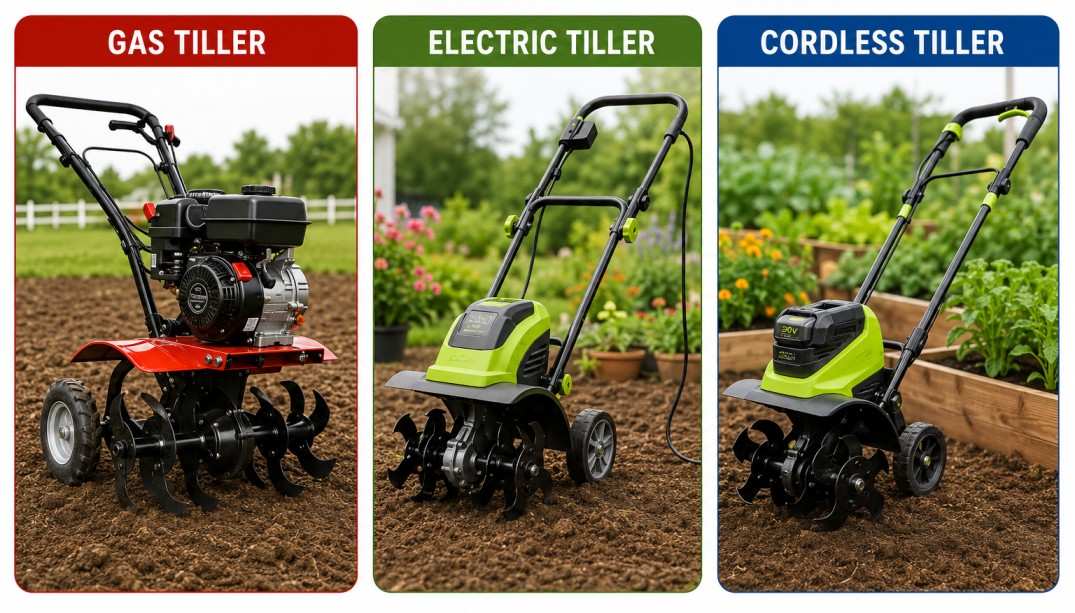
Gas vs. Electric vs. Cordless Tillers: The comparison table below outlines the key differences to help you select the right option for your gardening needs.
|
Feature |
Gas Tiller |
Corded Electric |
Cordless Battery |
|
Power Level |
High |
High |
Moderate |
|
Garden Size |
Large (2,000+ sq ft) |
Small, Medium |
Small, Medium |
|
Soil Type |
Heavy clay, compacted, or new ground |
Previously worked on soil |
Light to moderately compact soil |
|
Runtime |
Unlimited with fuel |
Unlimited while plugged in |
30 to 60 mins per charge |
|
Mobility |
Full mobility |
Limited by cord length |
Full mobility |
|
Noise Level |
High |
Moderate |
Low |
|
Maintenance |
High (oil, fuel, filters) |
Low |
Low |
|
Price Range |
$300 to $800+ |
$100 to $350 |
$150 to $400 |
10 Best Lawn Tillers in 2026 for Every Soil Type and Garden Size
Below are 10 of the best lawn tillers in 2026, selected for performance, durability, and suitability across different soil types and garden sizes:
1. Earthquake Victory Rear-Tine Tiller: A high-torque gas engine with counter-rotating rear tines, 16-inch working width, and 10-inch tilling depth, built for serious soil breaking with a 5-year warranty and US-based customer service.
-
Best For: Large gardens, heavy clay, and compacted soil across large American properties.
2. Troy-Bilt Bronco 208cc Gas Tiller: Powered by a dependable 208cc gas engine with dual counter-rotating tines and a 16-inch working width, delivering reliable self-propelled performance for large lawns and tough seasonal ground preparation.
-
Best For: Large lawns, clay-heavy soil, expanding garden areas, and mid-range gas power without overspending.
3. Sun Joe TJ604E Electric Tiller: A 13.5-amp corded electric tiller with a 16-inch tilling width and six rust-resistant steel tines, ideal for general soil preparation, garden beds, and regular backyard use across medium-sized plots.
-
Best For: General soil preparation, garden beds, and regular backyard use on plots up to 2,000 sq ft.
4. Greenworks 40V Cordless Tiller: A lightweight battery-powered model offering quiet operation and full mobility, running up to 40 minutes per charge with four adjustable tines for flexible soil depth control.
-
Best For: Raised beds, small to medium gardens, and areas without easy outlet access.
5. BILT HARD Electric Tiller: A compact 13.5-amp corded electric tiller with six steel blades and adjustable wheel height, designed for easy handling and efficient loosening of moderately compacted soil.
-
Best For: Beginners, light to moderately compacted soil, and straightforward seasonal garden preparation.
6. LawnMaster TE1318M Electric Tiller: Features an 18-inch cutting width and a 13.5-amp motor spinning six rust-resistant blades at 380 RPM, with mechanical overload protection for consistent and safe performance across large established gardens.
-
Best For: Regular home garden maintenance, large vegetable plots, and seasonal soil mixing on established beds.
7. Yardmax Rear-Tine Gas Tiller: A powerful gas-powered rear-tine tiller built for deep soil penetration up to 10 inches, with counter-rotating tines and heavy-duty steel construction suited for large American yards with clay-heavy or compacted ground.
-
Best For: Deep penetration in clay-heavy and compacted soil across large gardens and suburban plots.
8. BILT HARD 46cc Gas Tiller: Powered by a 46cc 4-stroke engine delivering a 16-inch working width and 8-inch depth, with six steel blades, four angled tines, and a cushioned ergonomic handle for comfortable extended use.
-
Best For: Breaking new ground, large-scale garden preparation, orchards, and fields with hard or rocky soil.
9. Ryobi ONE+ Cordless Cultivator: A battery-powered, lightweight cultivator compatible with the full Ryobi ONE+ 18V system, offering push-button start, adjustable tilling width, and quiet zero-emission operation for fast garden refresh tasks.
-
Best For: Small gardens, flower beds, raised beds, and quick soil refresh jobs for existing Ryobi tool users.
10. Alloyman 20V Cordless Tiller: A compact cordless tiller powered by two included 2.0Ah batteries, operating at 360 RPM with a 9-inch tilling width and 6.6-inch depth, delivering full mobility for small spaces and raised bed gardening.
-
Best For: Small urban gardens, raised beds, flower borders, and tight or hard-to-reach spots where cords are impractical.
Check out how to diagnose and repair a Powermate rototiller like a pro for quick fault detection and easy repair steps
Essential Maintenance Tips to Extend the Life of Your Lawn Tiller
Proper maintenance is key to keeping your lawn tiller running efficiently, improving performance, and preventing unexpected breakdowns over time. Follow these key care practices:
-
Clean After Every Use: Remove dirt, weeds, and debris from the tines and body after each session to prevent rust, corrosion, and long-term engine damage.
-
Check and Change Engine Oil: Check the oil level before every use. Change it after the first 5 hours on a new tiller, then every 25 to 30 hours or once per season thereafter.
-
Clean the Air Filter: Inspect the air filter every 10 hours of use and clean it more often in dusty conditions. Replace it fully at least once a year for consistent engine performance.
-
Inspect and Sharpen Tines: Check tines for wear, cracks, and loose bolts every season. Sharpen dull tines every 30 to 40 hours of use to reduce engine strain and maintain cutting efficiency.
-
Lubricate Moving Parts: Grease the tine shaft, wheel axles, and control cables regularly to reduce friction, prevent rust, and keep all components moving smoothly.
-
Manage Fuel Before Storage: Before storing for the off-season, either drain the fuel tank completely or add a fuel stabiliser to prevent carburettor clogging from stale petrol.
-
Tighten All Nuts and Bolts: Check and tighten all fasteners before every use. Tiller vibration gradually loosens hardware, which can cause mechanical damage or safety hazards if left unchecked.
Find out how to repair common tiller tine problems: A complete diy troubleshooting guide for quick tips to fix, replace, and maintain tines easily
Summary: Choosing the Best Lawn Tiller for Efficient Garden Soil Preparation
The best lawn tiller depends on your garden size, soil condition, and power needs. Gas tillers handle large and compacted areas, while electric and cordless models are better for lighter soil and smaller gardens. Choosing the right tiller and maintaining it properly helps improve soil quality, reduce manual labor, and support healthier plant growth.
Key Takeaways
-
Lawn tillers loosen compacted soil, improving airflow, water absorption, and root development.
-
Gas tillers provide the highest power for large gardens and clay-heavy soil.
-
Electric tillers are suitable for regular backyard maintenance and established garden beds.
-
Cordless tillers offer portability and quiet operation for raised beds and small spaces.
-
Proper maintenance, including cleaning, oil changes, and tine inspection, extends tiller lifespan.
-
Choosing the correct tiller based on soil type and garden size improves efficiency and reduces physical effort.
Looking for lawn tiller parts to keep your equipment running smoothly? At WholeToolBox, we offer high-quality lawn equipment parts, including air filters, carburetors, mufflers, and recoil starters for trusted brands like Honda, MTD, Toro, and more.
References:
https://www.nrcs.usda.gov/conservation-basics/soil/soil-health
FAQs
How deep should a lawn tiller be used?
A lawn tiller is typically used at a depth of 4 to 8 inches for most garden beds. This depth is enough to break up compact soil, improve aeration, and allow roots to grow more easily.
Why does my tiller keep stalling during use?
Stalling is often caused by clogged air filters, old fuel, or overloading the machine in tough soil conditions. Regular maintenance helps prevent this issue.
How much does it cost to repair a lawn tiller?
Repairing a lawn tiller typically costs $100 to $250 on average, depending on the issue and parts required.
|
Disclaimer: This article is for informational purposes only. Always follow the manufacturer’s safety and maintenance guidelines when using or repairing a lawn tiller. |