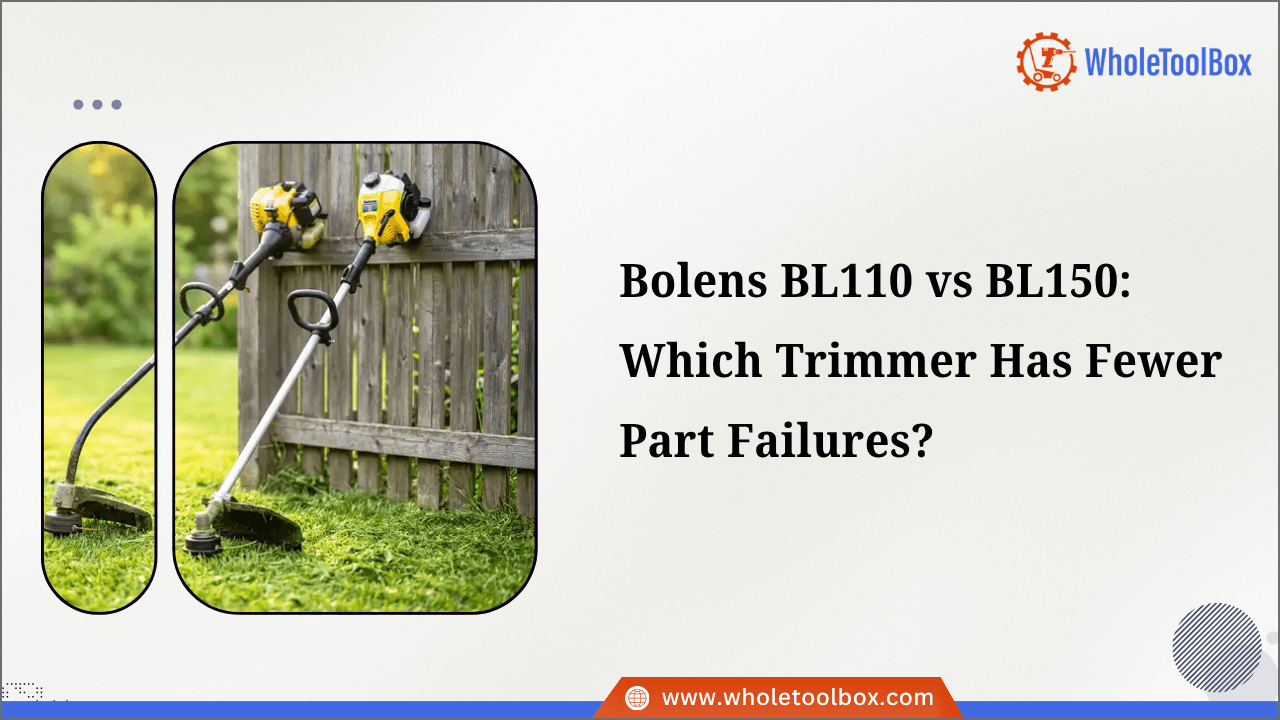
Bolens BL110 vs BL150: Which Trimmer Has Fewer Part Failures?
The Bolens BL110 and BL150 are widely used string trimmers for residential lawn care, but they differ in how consistently they hold up under regular use. Both models are designed for light to moderate trimming tasks, yet reliability trends show noticeable variation over time.
What causes one trimmer to wear out faster than the other, even under similar working conditions? User and service reports suggest that BL110 owners often encounter recurring minor issues about 30 %, most commonly related to starting difficulties and line feed problems.
In comparison, the BL150 tends to perform more consistently, with fewer reported concerns. When issues do arise, they are typically linked to fuel system wear or increased vibration after extended use. In this blog, we break down common part failures, compare durability, and share practical maintenance tips to extend trimmer life.
Overview of Bolens BL110 and BL150 Trimmers
The Bolens BL110 and BL150 share a similar operational foundation but differ significantly in power output and structural design, which is discussed below.
-
BL110 Trimmer: The BL110 is a curved-shaft trimmer designed for light-duty residential use. Its compact engine and curved shaft make it easier to maneuver in tight areas, especially around gardens, edges, and small yards.
-
BL150 Trimmer: The BL150, on the other hand, uses an engine paired with a straight steel shaft. This configuration delivers higher torque and better performance in dense vegetation or tougher trimming conditions.
Key Design, Engine & Build Differences: See the table below for a quick comparison of core specs and performance differences between BL110 and BL150
|
Category |
BL110 |
BL150 |
|
Engine Size |
25cc |
31cc |
|
Shaft Type |
Curved shaft |
Straight steel shaft |
|
Use Case |
Light trimming |
Medium to heavy vegetation |
|
Handling |
Easier maneuverability |
Higher power output |
|
Mechanical Stress |
Lower load |
Higher compression stress |
While both models rely on similar carburetor-based 2-stroke systems, the BL150 operates under higher internal pressure, which can influence long-term wear patterns.
Looking for the correct replacement parts to keep your lawn trimmer running smoothly and efficiently? Shop high-quality lawn trimmer parts at WholeToolBox, including control levers, grip handles, handle bars, throttle cables, and throttle triggers.
Common Bolens BL110 Part Failures and Maintenance Issues
The BL110 is generally reliable for light use, but it is not free from recurring mechanical and fuel-related issues. Most problems are linked to fuel quality, carburetor condition, and wear in small moving components. These issues typically present in recognizable symptom patterns, which are outlined below for easier troubleshooting and repair reference.
BL110 Failure Summary Table: Refer to the table below for a detailed analysis of Bolens BL110 string trimmer parts, including common failure symptoms, causes, estimated frequency, and repair complexity.
|
Failure Symptom |
Estimated Frequency |
Likely Cause / Failed Part |
Repair Complexity |
|
The engine fails to start |
40 % |
Fouled spark plug, clogged carburetor, fuel line blockage, weak primer bulb |
Medium |
|
Starts then shuts off |
25 % |
Stale fuel, carburetor diaphragm clog, dirty air filter, restricted exhaust flow |
Medium |
|
Cutting line not feeding properly |
20 % |
Worn bump spring, damaged spool, faulty retaining knob |
Easy |
|
Recoil starter malfunction |
15 % |
Broken recoil spring, damaged starter pulley, misaligned housing |
Medium |
|
Internal crankcase wear/seal failure |
12 % |
Crankshaft seal deterioration, internal alignment wear |
Hard |
Note: In most cases, trimmer failures are preventable with consistent fuel system care and periodic cleaning. However, when internal sealing, crankcase wear, or clutch wear occurs in the Bolens BL150 string trimmer clutch system, repair complexity increases significantly.
Common Bolens BL150 Part Failures and Durability Concerns
The BL150 delivers higher power output, but this comes with increased sensitivity to fuel system condition and greater long-term engine stress. Most reported issues relate to starting difficulty and fuel delivery inconsistencies. These problems generally appear as recurring operational symptoms, summarized below for easier diagnosis and maintenance planning.
BL150 Failure Summary Table: Refer to the table below for a structured breakdown of common failure symptoms, estimated frequency, likely causes, and repair complexity.
|
Failure Symptom |
Estimated Frequency |
Likely Cause / Failed Part |
Repair Complexity |
|
The engine will not start |
35 % |
Carburetor diaphragm failure, clogged fuel lines, bad spark plug, primer bulb issues |
Medium |
|
Starts briefly, then stalls |
20 % |
Fuel starvation, carburetor imbalance, clogged spark arrestor, flooding |
Medium |
|
Low compression / weak power |
10% |
Worn piston rings, cylinder wear, and internal engine degradation |
Hard |
|
Cutting head not spinning or slipping |
8% |
Stripped drive shaft splines, worn head interface |
Medium |
|
Rough idle or unstable running |
12 % |
Carburetor misadjustment, dirty jets, air-fuel imbalance |
Medium |
Note: The BL150’s most critical long-term issue is compression loss, which develops gradually and can significantly reduce engine usability.
Check out how to fix common issues with your Tanaka weed trimmer and keep it running smoothly, improve performance, and extend its lifespan
How to Reduce Part Failures in Bolens BL110 and BL150
Reducing breakdowns in Bolens BL150 and BL110 trimmer parts requires a clear understanding of common failure points and methods to address them before they escalate. Below is a structured breakdown of each major system, including failure reasons and solutions.
Fuel System: Fuel degradation is the most common root cause of small-engine failure. Ethanol-blended or old fuel breaks down, forming varnish that restricts flow and damages soft components like fuel lines and primer bulbs.
-
Solution: Use a fresh 40:1 mix, avoid ethanol-heavy fuel, and replace hardened lines or cracked primer bulbs. Always drain fuel before long storage.
Carburetor: The carburetor is highly sensitive to contamination. Deposits from stale fuel clog jets and damage the diaphragm, leading to hard starting, surging, or stalling.
-
Solution: Clean the carburetor seasonally and replace diaphragm kits when performance drops. Keep factory tuning unless necessary.
Air Filter: A clogged filter reduces airflow, causing an overly rich mixture that lowers power and increases carbon buildup inside the engine.
-
Solution: Clean frequently during heavy use and replace when worn or deformed. Ensure airtight installation to prevent unfiltered air entry.
Spark Plug: Over time, carbon buildup and electrode erosion weaken ignition strength, resulting in misfires or inconsistent starts.
-
Solution: Replace the spark plug periodically rather than cleaning repeatedly, and always set the correct gap.
Spark Arrestor: Exhaust carbon buildup restricts airflow, increases backpressure, and can lead to overheating and power loss.
-
Solution: Clean the screen regularly or replace it if blockage is severe.
Recoil Starter Inspection: Mechanical wear in the spring, pulley, or cord leads to poor starting response or failure to retract properly.
-
Solution: Inspect routinely and replace worn components before complete failure occurs.
Summary: Choosing Between Bolens BL110 and Bolens BL150 for Long-Term Reliability
The Bolens string trimmer BL110 is more stable for light-duty use due to its lower engine stress and simpler design, which helps reduce long-term wear. The BL150 offers higher power but operates under greater internal stress, leading to wear faster if not properly maintained.
Key Takeaways
-
Bolens BL110 string trimmer parts offer better reliability for light trimming due to lower engine stress and a simpler design
-
BL150 delivers higher power but experiences greater long-term mechanical and compression wear
-
Most failures in both models are caused by fuel system neglect rather than manufacturing defects
-
Carburetor issues are the most common failure point across both trimmers
-
Regular air filter and spark plug maintenance significantly improves starting reliability
-
Proper fuel handling and storage practices are the strongest factor in extending engine life
FAQs
How often should a Bolens BL110 be serviced?
The Bolens BL110 should typically be serviced every 25 to 30 hours of operation or at least once per season. Basic servicing includes cleaning the air filter, inspecting the spark plug, and checking fuel lines.
What type of engine is in a Bolens BL150?
The Bolens BL150 is equipped with a 2-cycle (2-stroke) gasoline engine, usually around 31cc. This engine type runs on a mixed fuel of gasoline and 2-stroke oil, offering higher power output compared to smaller residential trimmers.
How do I know if my Bolens BL110 trimmer head needs replacement?
A worn or damaged trimmer head may show signs like poor line feeding, excessive vibration, cracked housing, or difficulty bumping out new line.
Why is my Bolens string trimmer not starting?
A starting issue in a Bolens string trimmer is most often caused by fuel or ignition problems. Common reasons include old or incorrect fuel mix, a clogged carburetor, a fouled spark plug, or blocked fuel lines.
| Disclaimer: This blog is for informational purposes only. Maintenance issues and solutions may vary based on usage and condition. |