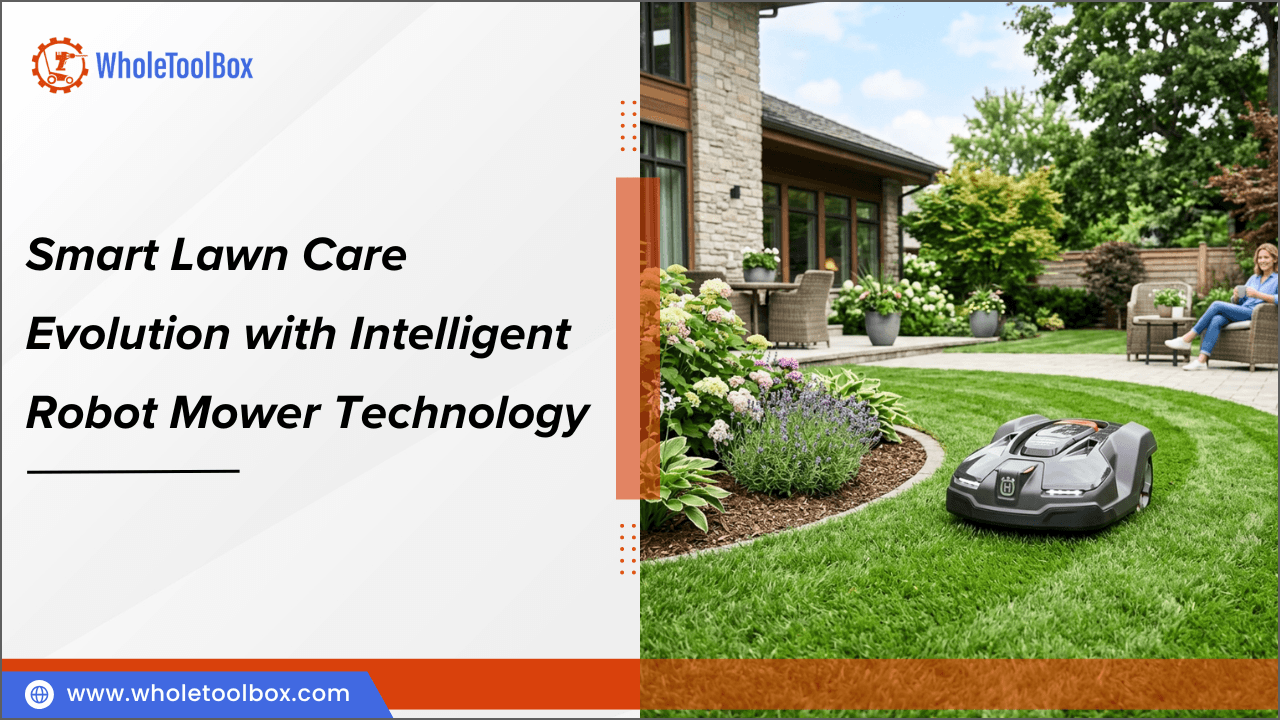
Smart Lawn Care Evolution with Intelligent Robot Mower Technology
Lawn care once meant sacrificing weekends to push heavy mowers across uneven grass, dealing with noise, effort, and inconsistent results. It was a repetitive, time-consuming task that often delivered uneven cuts depending on weather conditions, timing, and manual effort.
Today, that routine has completely changed with intelligent robot mower technology. What once required manual effort is now handled by compact, AI-powered machines that cut grass automatically, maintain precise schedules, and adapt to lawn conditions in real time. Instead of occasional heavy mowing, lawns are now maintained continuously in small, efficient cycles that keep them healthier and more uniform.
In this blog, we explore how robot mowers are reshaping modern lawn care, the key features behind their performance, and how to select the right model based on yard size and terrain.
How Intelligent Robot Mowers Are Reshaping Modern Lawn Care
Modern robot mowers are changing lawn care from a time-consuming chore into an automated, low-effort routine. Instead of mowing once a week, they trim grass in small, frequent cycles. This keeps lawns evenly maintained while turning clippings into fine mulch that supports soil health and helps reduce weed growth.
Robot mowers save 60 to 90 hours a year by using scheduled or adaptive cutting, and they also reduce noise and emissions by running quietly on electricity instead of gas. With very low energy use (under 20 kWh annually), they cost just a few dollars to operate, making them both time-saving and eco-friendly.
Below, we analyze real-world performance strengths and the overall cost efficiency of robot mowers over time.
Real-World Performance & Smart Capabilities of Lawn Mowers
Today’s advanced lawn mower models go beyond simple automation. They are designed to handle complex lawn conditions that would normally require extra effort, as highlighted below:
-
Slope Handling: Premium models like the Husqvarna Automower 450X can manage inclines of up to 45%, making them suitable for uneven or hilly terrain.
-
Precision Navigation: Built-in GPS and smart mapping allow mowers to cover multiple zones efficiently without missing spots.
-
Wire-Free Innovation: Newer options, such as the Toro Haven Robotic Mower, use cameras and AI-based vision to map lawns in 3D, eliminating the need for boundary wires and enabling smooth operation under trees or other obstacles.
These intelligent features enable robot mowers to navigate tight spaces, narrow pathways, and complex yard layouts with minimal human input.
Cost Efficiency Over Time
While the upfront cost of a robot mower may seem high, it often proves economical in the long run, as shown below.
-
Robot Mower (5-year cost): ~$3,000 to $4,000
-
Traditional Riding Mower (5-year cost): ~$5,500 to $7,000
Savings come from reduced fuel usage, lower maintenance needs, and minimal labor. Over time, these benefits make robotic mowers a practical investment for owners.
Check out the rise of robotic yard work: How AI is changing lawn care to learn how technology is transforming modern lawn care
Essential Features to Consider in Smart Robot Mower Technology
Understanding the core features of a smart robot mower helps you choose the right model for your lawn size, terrain, and usage needs. Below are the key features to look for when comparing performance, efficiency, and long-term value.
-
Navigation & Mapping: Robot mowers use either boundary wires or wire-free navigation systems. Brands like Honda Miimo and Husqvarna Automower use buried wires with GPS support, while newer models such as Segway Navimow use camera or RTK-GPS technology for precise wire-free mowing. Advanced units with LiDAR and cameras can map yards quickly and manage multiple zones.
-
Cutting Performance: Most robot mowers use 3 to 12 pivoting blades under a floating deck for clean and even trimming. Cutting widths range from about 20 cm (8″) to 43 cm (17″). Wider decks cover more ground faster. Nearly all models mulch grass clippings into fine particles, and some include edge-cutting modes for border areas.
-
Battery & Runtime: Residential robot mowers typically run on 18 to 28 V lithium-ion batteries. Runtime varies by model, from around 1 hour to 270 min or even 4.5 hours. Charging usually takes 60 to 90 minutes, with many reaching 80% charge in under 1 hour.
-
Slope Handling & Traction: Slope capability ranges from around 30% on entry-level units to 45%+ on advanced models. Premium mowers with all-wheel drive and dual motors offer better traction on hills and uneven ground.
-
Sensors & Safety: Most models include collision, lift, and tilt sensors with automatic blade stop systems. Security features may include PIN locks, alarms, and GPS tracking.
-
Connectivity & Maintenance: Many robot mowers support Bluetooth, Wi-Fi, or cellular app control for scheduling, tracking, and updates. Maintenance is simple with weekly cleaning, blade replacement every 2 to 3 months, and battery changes every 3 to 5 years. No fuel or oil is needed, reducing long-term costs.
Benefits of Automated Lawn Maintenance for Homeowners
The key benefits of automated lawn maintenance for homeowners are listed below,
-
Improved Lawn Health: Robot mowers trim grass frequently in small amounts, which helps maintain consistent height and reduces plant stress. Fine mulching returns nutrients to the soil, promoting thicker, greener grass and reducing weed growth over time.
-
Consistent Lawn Appearance: Automated scheduling ensures the lawn is always evenly cut without waiting for weekends or ideal weather. This results in a cleaner, more uniform look with fewer patches or overgrown areas.
-
Reduced Physical Effort: Robot mowers eliminate the need for pushing or riding heavy equipment, especially on large or sloped lawns. This makes lawn care easier and more accessible for homeowners of all ages.
-
Quiet & Low-Disruption Operation: With noise levels around 55 to 58 dB, robot mowers operate much more quietly than traditional machines. This allows for flexible mowing times, including early mornings or evenings, without disturbing neighbors.
-
Smart Control: App-based controls allow users to start, stop, or reschedule mowing remotely. This is especially useful for busy homeowners, enabling full lawn management from anywhere.
Choosing the Right Robot Mower for Yard Size and Terrain
Selecting the ideal robot mower depends mainly on yard size, terrain complexity, such as slopes and obstacles, and budget. The table below compares popular models available in the US market based on key performance factors.
|
Model |
Battery & Run Time |
Max Slope |
Connectivity |
Notable Features |
|
Husqvarna Automower 450X NERA |
10 Ah Li-ion (~270 min) |
45% (24°) |
Bluetooth + GSM |
GPS mapping, object detection, smart zones |
|
Segway Navimow X450 |
9.5 Ah (~2 to 3 h) |
84% (40°) |
RTK-GPS + App |
4WD, Xero-Turn™, dual motors |
|
Honda Miimo HRM520 |
3.6 Ah (~60 min) |
47% (25°) |
Basic (no Wi-Fi) |
Multiple cutting patterns, multi-zone setup |
|
Worx Landroid L |
5.0 Ah (~60 min) |
30% |
Bluetooth + Wi-Fi |
AIA navigation, edge cutting |
|
STIHL iMOW 5 EVO |
~6 to 7 Ah (~65 min) |
45% (24°) |
Wi-Fi + 4G |
High-speed blades, voice alerts |
Buyer personas are discussed below to simplify decision-making across different lawn types, sizes, and terrain complexities.
Buyer Personas & Recommendations
Buyer personas help match robot mower features to specific yard types and homeowner needs. Below are the key categories to guide the right selection based on lawn size and terrain conditions.
-
Small Urban Yard: Choose compact, affordable robot mowers for simple lawns and tight layouts. Best for 1,000 to 5,000 ft², flat terrain, and minimal obstacles. App control and quiet operation are key benefits.
-
Medium Suburban Yard: Look for models with longer battery life, smart navigation, and moderate slope handling. Ideal for 0.25 to 0.5 acre lawns, with some premium units covering up to 1 acre. Choose models rated for 25 to 30% slopes.
-
Large / Varied Terrain: Select heavy-duty robot mowers built for 1 to 2.5+ acres, complex layouts, and uneven ground. Prioritize GPS mapping, long runtime, and all-wheel-drive traction. Premium units can manage 45 to 70% slopes, depending on the model.
Every yard is different, so factors like lawn size, slope, obstacles, and budget should guide the final choice. Using manufacturer lawn calculators can further refine selection, ensuring long-term efficiency and better lawn health.
Summary:The Future of Lawn Care Is Smart, Efficient, and Autonomous
Smart robot mowers are transforming lawn care by automating routine maintenance with precision and efficiency. They offer consistent cutting, eco-friendly operation, and advanced navigation for complex terrains. With reduced effort and long-term cost savings, they provide a practical solution for owners. As technology evolves, robotic mowing is becoming the future standard for lawn maintenance.
Key Takeaways
-
Robot mowers maintain lawns through frequent, automated trimming for healthier grass growth
-
Significant time savings by eliminating manual mowing (up to 60 to 90 hours annually)
-
Eco-friendly operation with low energy use and zero direct emissions
-
Advanced features like GPS mapping, AI navigation, and app control improve efficiency
-
Long-term cost benefits outweigh initial investment due to low maintenance and no fuel use
-
Choosing the right model depends on yard size, slope, and terrain complexity
Shop high-quality lawn equipment parts at WholeToolBox. Find durable fuel tanks, engine gaskets, ignition coils, motors, and mufflers from trusted brands like Husky, Honda, Echo, and MTD to keep your equipment running efficiently.
References:
https://www.protoolreviews.com/toro-haven-robotic-lawn-mower-review
FAQs
What is the average lifespan of a robot lawn mower?
A robot lawn mower typically lasts around 8 to 12 years, depending on usage, maintenance, and battery care. Regular blade changes and proper storage can extend its lifespan.
What is the best height to cut grass with a robot mower?
The ideal cutting height is usually 2 to 3.5 inches (5 to 9 cm). Keeping grass slightly taller helps improve lawn health, retain moisture, and prevent weed growth.
What is the cheapest time of year to buy a lawn mower?
The best time to buy a lawn mower is during late summer to early fall or end-of-season sales, when retailers discount old stock to make room for new models.
| Disclaimer: This blog is for general informational purposes only. Robot mower performance, efficiency, and cost savings may vary based on yard size, terrain, usage patterns, and local conditions. |