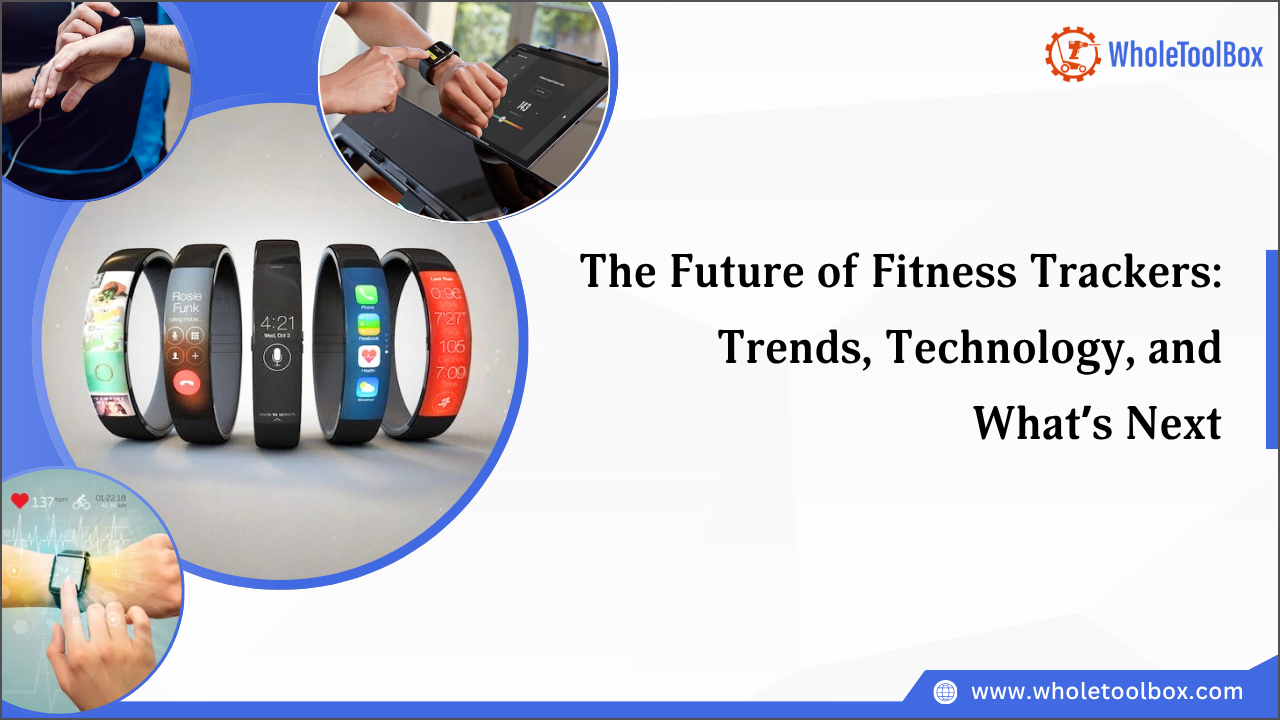
The Future of Fitness Trackers: Trends, Technology, and What’s Next
Fitness trackers have evolved far beyond counting steps. Early devices focused on basic activity metrics, but today's wearables continuously monitor heart rate, sleep quality, stress levels, blood oxygen, and recovery. Many can even detect irregular heart rhythms, helping users become more proactive about their health.
In 2026, wearable technology is entering a new era driven by artificial intelligence (AI), medical-grade sensors, and deeper healthcare integration. Modern fitness trackers are becoming smarter, offering personalized coaching, predictive health insights, and seamless connectivity with healthcare providers.
This blog explores how fitness trackers have evolved, the latest trends shaping wearable technology, advanced innovations redefining health monitoring, and how these devices will influence the future of personal fitness and preventive healthcare.
|
Table of Contents: |
The Evolution of Fitness Trackers: From Basic Tracking to Smart Health Insights
Fitness tracking has evolved from simple pedometers that counted steps to advanced wearable devices that provide detailed health insights. Early digital trackers focused mainly on exercise, while modern smartwatches introduced features like heart-rate monitoring, GPS, sleep tracking, and smartphone connectivity.
Today’s fitness trackers use advanced sensors to monitor metrics such as HRV, blood oxygen, stress, sleep quality, and recovery. This evolution has transformed wearables from basic activity trackers into intelligent health tools that support preventive care and healthier lifestyles.
5 Emerging Trends Transforming Fitness Tracking and Health Monitoring
Below are the 5 key trends shaping the next generation of fitness trackers and wearable health technology.
Trend 1: Medical-Grade Health Monitoring
Fitness trackers are moving beyond basic activity tracking toward advanced health monitoring. Features like ECG, AFib detection, blood oxygen tracking, and sleep analysis help users identify potential health risks earlier.
Trend 2: AI-Powered Health Coaching
AI is transforming fitness trackers into personalized wellness assistants. By analyzing activity, sleep, heart rate, and recovery data, AI provides customized recommendations, predicts health trends, and helps users optimize workouts, recovery, and lifestyle choices.
Trend 3: New Wearable Designs
Fitness tracking is expanding beyond smartwatches with devices like smart rings, smart clothing, and sensor-enabled earbuds. These new formats offer comfortable and discreet ways to monitor health metrics such as sleep, body temperature, movement, and performance.
Trend 4: Healthcare Integration
Wearable devices are becoming more connected with healthcare systems and telemedicine platforms. Sharing wearable data with healthcare providers helps improve remote monitoring, chronic disease management, and personalized treatment decisions.
Trend 5: Privacy and Security
As wearables collect more personal health data, privacy and security are becoming major priorities. Companies are improving encryption, secure data storage, and user controls to ensure health information remains protected.
Find out how beginners can build a powerful strength training routine for a stronger 2026 for smarter strength training
Advanced Features and Innovations Defining Future Fitness Trackers
The following innovations are expected to make future fitness trackers more accurate, intelligent, and user-friendly.
- Advanced Sensors: Future fitness trackers will use advanced sensors to monitor heart health, sleep, oxygen levels, temperature, and other health metrics. Emerging biosensors may also track hydration, metabolism, inflammation, and blood markers.
- Smarter AI: AI will help wearables analyze health trends, predict fatigue, detect early health risks, and provide personalized fitness and lifestyle recommendations while improving data privacy through on-device processing.
- Longer Battery Life: Improved processors, software optimization, and new charging methods like solar and kinetic energy will enable longer battery life, supporting continuous health monitoring.
- Better Materials: Future devices will become lighter, thinner, and more comfortable with flexible electronics, smart fabrics, and advanced materials, making all-day wear easier.
- Health Data Integration: Fitness trackers will connect more seamlessly with healthcare systems, wellness apps, and digital health platforms, creating a more complete and personalized health ecosystem.
How Fitness Trackers Will Influence the Future of Personal Health and Fitness
The following developments show how fitness trackers are expected to reshape personal health management.
- Early Health Monitoring: Fitness trackers continuously monitor health metrics, helping detect early signs such as irregular heart rhythms, poor sleep, increased stress, reduced activity, and slower recovery before they become serious health concerns.
- Healthier Habits: These devices encourage healthier lifestyles by promoting regular exercise, better sleep, stress management, and consistent physical activity. Goal tracking and progress reports help users stay motivated and accountable.
- AI Coaching: AI-powered fitness trackers provide personalized recommendations based on individual health data. Instead of generic advice, users receive customized workout plans, recovery guidance, and lifestyle suggestions that better support their personal fitness goals.
- Remote Care: Healthcare providers increasingly use wearable data for remote patient monitoring. This allows physicians to track patients between appointments, detect health changes sooner, improve chronic disease management, and reduce unnecessary hospital visits.
- Preventive Healthcare: Wearable technology is helping shift healthcare from treating illness to preventing it. Continuous monitoring, early detection, and personalized interventions will play an increasingly important role in future healthcare systems.
- Better Accessibility: As fitness trackers become more affordable and accessible, more people across different age groups and income levels will benefit from wearable health technology and personalized preventive care.
Check out Fitness Elite 2026: Discover the Top Trends in Strength, Cardio, and Recovery, your complete guide to smarter training
Summary: Future Outlook of Fitness Trackers and Wearables
Fitness trackers are evolving into intelligent health companions that combine AI, advanced sensors, and healthcare integration to provide personalized health insights. Future wearables will help detect health changes earlier, improve fitness decisions, and support preventive healthcare through continuous monitoring.
Key Takeaways
- Fitness trackers have evolved from simple step counters into advanced health monitoring devices.
- AI-powered analytics provide personalized coaching and predictive health insights.
- Medical features like ECG, sleep monitoring, and health alerts are becoming more common.
- Smart rings, smart clothing, and flexible sensors represent the next generation of wearables.
- Integration with healthcare systems is expanding the role of wearables in preventive care.
- Privacy, security, and user-controlled health data will remain essential for future innovation.
Shop high-quality fitness equipment replacement parts at WholeToolBox, including bench parts, bike parts, elliptical parts, and treadmill parts from brands like Vision Fitness, ProForm, Horizon Fitness & more.
References:
https://pmc.ncbi.nlm.nih.gov/articles/PMC9038923/
https://integrishealth.org/resources/on-your-health/2026/january/how-wearables-are-revolutionizing-health
FAQs
Can fitness trackers accurately detect heart problems?
Many premium fitness trackers can detect irregular heart rhythms and record ECG readings. However, they are screening tools and should not replace professional medical evaluation.
Will fitness trackers eventually measure blood glucose without needles?
Researchers are developing non-invasive glucose monitoring technologies, but no consumer smartwatch or fitness tracker has regulatory approval for standalone blood glucose measurement at this time.
Are smart rings as accurate as smartwatches?
For metrics such as sleep, resting heart rate, and recovery, high-quality smart rings can provide comparable accuracy. Smartwatches typically offer additional features like GPS, larger displays, and workout tracking.
|
Disclaimer: This article is for informational purposes only and should not be considered medical advice. Always consult a healthcare professional for medical concerns. |