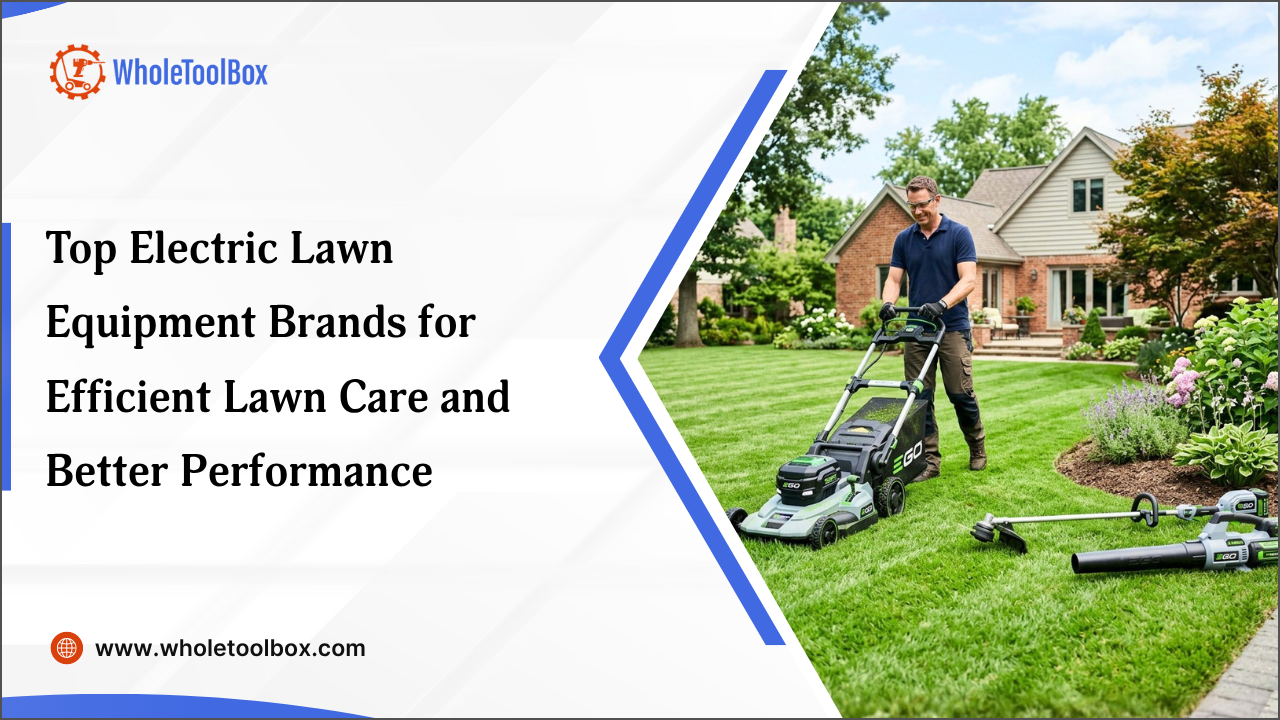
Top Electric Lawn Equipment Brands for Efficient Lawn Care and Better Performance
Maintaining a healthy, well-kept lawn requires the right equipment, especially when dealing with large areas, thick grass, slopes, or uneven terrain. Electric lawn equipment has become a popular alternative to traditional gas-powered tools, offering quiet operation, cordless convenience, and lower maintenance requirements.
With advancements in lithium-ion batteries and brushless motor technology, modern electric lawn equipment delivers reliable power and improved efficiency for everyday lawn care. From cordless mowers and trimmers to blowers and other outdoor tools, today’s options are designed to make lawn maintenance easier and more convenient.
In this blog, we cover the top electric lawn equipment brands for 2026, important features to consider, the best equipment for different lawn conditions, and essential maintenance tips for long-lasting performance.
|
Table of Contents: |
Why Electric Lawn Equipment Is Growing in Popularity
Electric lawn equipment is becoming more popular as improved batteries and brushless motors deliver longer runtimes, efficient power, and consistent performance. It also reduces fuel and engine maintenance costs while offering quieter operation and easier starting.
Stricter emissions regulations are further supporting the shift from gasoline to electric equipment. California, for example, has restrictions affecting new gasoline-powered small off-road engines for applicable 2026 and later model years. These benefits make electric equipment increasingly practical for residential and professional lawn care.
Reduced Noise, Vibration, and Fumes: Electric lawn equipment can provide quieter operation with less vibration and fewer fuel-related fumes than gas-powered equipment. The Colorado Department of Public Health and Environment notes that these benefits can reduce noise pollution, user fatigue, and exposure to fumes while supporting lower emissions.
Top Electric Lawn Equipment Brands for 2026
The following companies mentioned in the table below offer solutions across residential, professional, and robotic applications.
|
Brand |
Battery Platform/Technology |
Key Strength |
|
EGO Power+ |
56V ARC Lithium |
High-performance cordless equipment |
|
Greenworks |
40V, 60V, 80V+ platforms |
Residential and commercial versatility |
|
Milwaukee |
M18 battery ecosystem |
Durable professional-oriented equipment |
|
Ryobi |
40V HP Brushless |
Value and versatile performance |
|
Toro |
60V Max |
Personal Pace drive technology |
|
Mammotion |
RTK GPS, LiDAR, AI Vision |
Advanced autonomous mowing |
|
Husqvarna |
EPOS and AI Vision |
Precision robotic mowing |
|
Segway Navimow |
VisionFence AI |
Autonomous obstacle detection |
How to Choose the Right Electric Lawn Equipment for Your Yard
Choosing the right electric lawn equipment starts with understanding your yard’s size, terrain, grass conditions, and workload. Battery voltage, capacity, traction, deck materials, and cutting technology all affect runtime, maneuverability, durability, and overall performance. Use the following factors to select equipment that matches your lawn care needs.
- Match Battery Voltage to Yard Size: Battery voltage provides a useful starting point for matching equipment power to property size and workload:
- 20V to 40V: Best for smaller properties under 0.25 acres and light-duty tasks. These systems are typically lightweight and easy to maneuver.
- 40V to 60V: A versatile range for medium-sized suburban lawns from 0.25 to 0.5 acres, offering a balance of power and portability.
- 80V and Higher: Better suited for larger properties, dense turf, slopes, and demanding applications that require higher power output.
- Choose Battery Capacity: Battery capacity, measured in amp-hours (Ah), affects how long equipment can operate before recharging. Higher-capacity batteries generally provide longer runtime but may also add weight.
- Under 0.25 acres: 2.5Ah to 5.0Ah batteries are often sufficient for routine maintenance.
- 0.25 to 0.50 acres: 5.0Ah to 7.5Ah batteries can provide additional runtime for larger mowing areas.
- Over 0.50 acres: 7.5Ah to 12.0Ah batteries or dual-battery systems can reduce charging interruptions.
- Choose the Right Robotic Navigation Technology: For robotic mowers, navigation technology should match the property's layout:
- RTK GPS: Suitable for larger, open lawns with good sky visibility.
- LiDAR: Useful for yards with significant shade or tree coverage.
- Vision-Based Systems: Practical for properties with clearly defined physical boundaries.
- Evaluate Terrain and Traction: Choose rear-wheel or all-wheel-drive mowers for better control on slopes and uneven terrain. Check robotic mowers for their maximum slope rating.
- Check Deck and Cutting System: Composite and plastic decks are lightweight and rust-resistant, while steel and cast-aluminum decks offer greater durability. Multi-blade systems can improve cutting and mulching performance.
Essential Maintenance Tips for Electric Lawn Equipment
Below are the key maintenance practices to keep electric lawn equipment running efficiently and safely.
- Protect Battery Health: Avoid fully draining batteries repeatedly. Let hot batteries cool before charging, and store them partially charged in a cool, dry place during the off-season.
- Keep Equipment Clean: Remove the battery before cleaning and avoid high-pressure water. Clear grass and debris with a nylon brush, and keep motor vents unobstructed to prevent overheating.
- Inspect and Sharpen Blades; Check blades regularly for wear or damage. Sharpen or replace them as needed to maintain efficient cutting and mulching performance.
- Check Fasteners: Inspect nuts, bolts, and screws for looseness and tighten them as needed to maintain stability and safe operation.
Find out how to protect your lawn from summer heat and drought damage this summer
Summary: Choose the Right Electric Equipment for Efficient Lawn Care
Electric lawn equipment offers quieter operation, lower maintenance, and improved efficiency, with advances in batteries, brushless motors, and autonomous technology expanding its capabilities. Choosing the right equipment based on yard size, battery capacity, terrain, and cutting needs.
Key Takeaways
- Electric lawn equipment provides quieter operation and eliminates many gasoline-engine maintenance tasks.
- Battery voltage and amp-hour capacity should match the size and workload of the property.
- EGO Power+, Greenworks, Milwaukee, Ryobi, and Toro offer diverse cordless lawn equipment options.
- Mammotion, Husqvarna, and Segway Navimow provide advanced solutions for autonomous mowing.
- Proper battery storage, cleaning, blade maintenance, and fastener checks can help extend equipment service life.
Shop high-quality lawn & garden equipment parts at WholeToolBox. Find durable air filters, carburetors, crankshafts, flywheels, and fuel tanks designed to keep your lawn equipment running efficiently.
References:
https://cdphe.colorado.gov/emissions-from-business-and-industry/lawn-and-garden-equipment-requirements
FAQs
How does a brushless motor improve electric lawn equipment?
A brushless motor reduces friction and heat during operation, helping improve energy efficiency, runtime, and motor durability. It also requires less maintenance than brushed motors.
What does the IP rating indicate for electric lawn equipment?
The IP rating indicates how well electrical components are protected against dust, debris, and water. A suitable rating helps equipment handle typical outdoor operating conditions.
|
Disclaimer: This content is for informational purposes only. Features and performance may vary by model. Always follow the manufacturer’s specifications and safety guidelines. |